-
Your next favorite book
is waiting.
Summary | Excerpt | Reviews | Beyond the book | Read-Alikes | Genres & Themes | Author Bio

A Hong Kong Memoir
by Karen Cheung Book Reviewed by:
A boldly rendered - and deeply intimate - account of Hong Kong today, from a resilient young woman whose stories explore what it means to survive in a city teeming with broken promises.
Hong Kong is known as a place of extremes: a former colony of the United Kingdom that now exists at the margins of an ascendant China; a city rocked by mass protests, where residents rally—often in vain—against threats to their fundamental freedoms. But it is also misunderstood, and often romanticized. Drawing from her own experience reporting on the politics and culture of her hometown, as well as interviews with musicians, protesters, and writers who have watched their home transform, Karen Cheung gives us a rare insider's view of this remarkable city at a pivotal moment—for Hong Kong and, ultimately, for herself.
Born just before the handover to China in 1997, Cheung grew up questioning what version of Hong Kong she belonged to. Not quite at ease within the middle-class, cosmopolitan identity available to her at her English-speaking international school, she also resisted the conservative values of her deeply traditional, often dysfunctional family.
Through vivid and character-rich stories, Cheung braids a dual narrative of her own coming of age alongside that of her generation. With heartbreaking candor, she recounts her yearslong struggle to find reliable mental health care in a city reeling from the traumatic aftermath of recent protests. Cheung also captures moments of miraculous triumph, documenting Hong Kong's vibrant counterculture and taking us deep into its indie music and creative scenes. Inevitably, she brings us to the protests, where her understanding of what it means to belong to Hong Kong finally crystallized.
An exhilarating blend of memoir and reportage, The Impossible City charts the parallel journeys of both a young woman and a city as they navigate the various, sometimes contradictory paths of coming into one's own.
Excerpt
The Impossible City
1997
Summers in Hong Kong always heave with rain, but on this first of July, the downpour feels deliberate, overdone. The water is charging down the steps, drenching our concrete pavements, dripping from the banyan trees. The observatory hoists the black rainstorm signal, to warn us of tumbling landslides. It is too neat a metaphor, but still we're pointing to the sky, mumbling to ourselves: It's crying.
I am four years old. After my parents' separation, my mother and little brother move to Singapore. They live in a property overlooking the East Coast beach, where I would later spend my summers rollerblading and sitting on the back of my mother's bike. They won't return, and neither will my father and I move there as he had promised. I'd grow up as if I were a single child. But I don't know that, not yet. My grandmother is seventy, and her post-retirement project is me. When I'm running a fever late in the middle of the night, she places a damp cloth ...
Despite the heavy subject matter, Cheung has a candor and warmth that come through in these pages. The chapters, which read more like separate essays than a cohesive memoir, never feel like lectures. Rather, she gives vivid accounts of her experiences, then connects them to larger social issues. I also love that she explored what it means to be an activist. Cheung has done quite a lot by writing this book. Through her, we're able to humanize a movement and think of those affected by it. We connect more deeply with the issues around us. And we also learn about some fantastic new-to-us bands...continued
Full Review
 (1225 words)
(Reviewed by Erin Lyndal Martin).
 Barbara Demick, author of Nothing to Envy and Eat the Buddha
Karen Cheung is an amazingly good writer whose precise observations about Hong Kong puncture the gauzy clichés about mahjong and milk tea. In The Impossible City, she has produced an edgy, highly personal memoir about a generation living in cage-size apartments and confronting tear gas, electronic surveillance, cultural confusion, and depression as they witness the disappearance of the city they call home. Hua Hsu, author of A Floating Chinaman
Hums with the thrill of being lost in this massive, haunted, mythologized, neon city, yet finding oneself in the end. Kat Chow, author of Seeing Ghosts
With her radiant prose and incisive reporting, Karen Cheung renders modern-day Hong Kong with evocative detail in The Impossible City. The word protest lingered in my head as I read Cheung's words about coming of age in her constantly shifting city under the precarious specter of authoritarianism. There is an unmissable passion and intelligence in this story as Cheung weaves together cultural criticism and memoir, insisting that Hong Kong—her Hong Kong—is worthy of our close attention and love.
Barbara Demick, author of Nothing to Envy and Eat the Buddha
Karen Cheung is an amazingly good writer whose precise observations about Hong Kong puncture the gauzy clichés about mahjong and milk tea. In The Impossible City, she has produced an edgy, highly personal memoir about a generation living in cage-size apartments and confronting tear gas, electronic surveillance, cultural confusion, and depression as they witness the disappearance of the city they call home. Hua Hsu, author of A Floating Chinaman
Hums with the thrill of being lost in this massive, haunted, mythologized, neon city, yet finding oneself in the end. Kat Chow, author of Seeing Ghosts
With her radiant prose and incisive reporting, Karen Cheung renders modern-day Hong Kong with evocative detail in The Impossible City. The word protest lingered in my head as I read Cheung's words about coming of age in her constantly shifting city under the precarious specter of authoritarianism. There is an unmissable passion and intelligence in this story as Cheung weaves together cultural criticism and memoir, insisting that Hong Kong—her Hong Kong—is worthy of our close attention and love.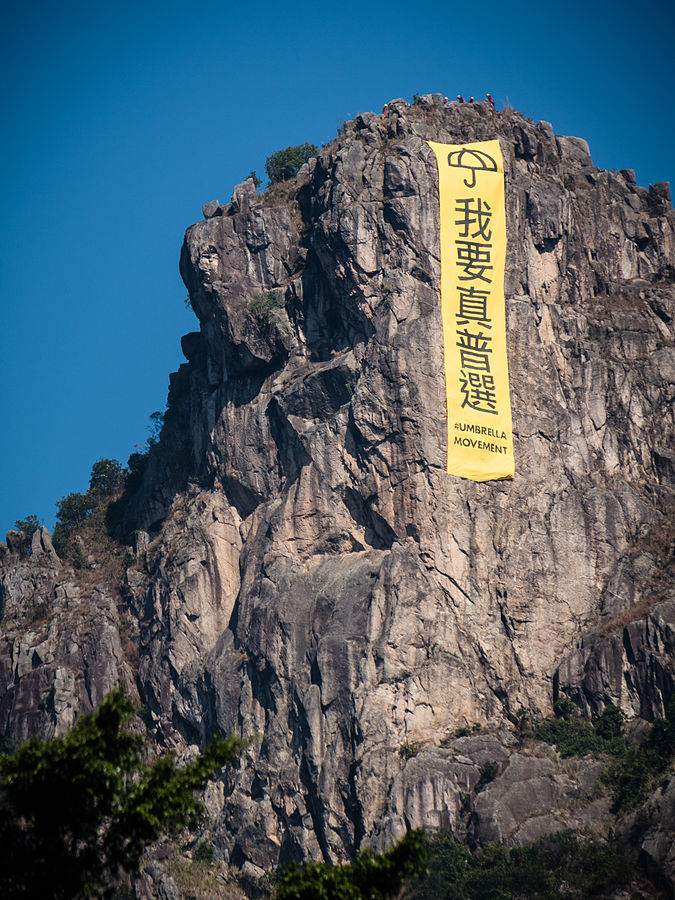 In The Impossible City, Karen Cheung references a cultural code of conduct in Hong Kong called Lion Rock Spirit. Lion Rock is a 495 meter (1,600 ft) granite mountain in Kowloon Park in the urban area of Kowloon, in southern Hong Kong. but the idea of Lion Rock Spirit as a set of values has a more unlikely origin story. In the 1970s, a TV show titled Below the Lion Rock premiered in Hong Kong. The series ran from 1972-2016 and featured stories of working-class Hong Kongers. Its theme song is slow and earnest, unlike the catchy jingles of many TV shows. Yet, the song, "Lion Rock Spirit," felt apt then, and has persisted into the present day. That's right — a significant part of the Hong Kong national ethos comes from a 1970s TV program....
If you liked The Impossible City, try these:

1000 Years of Joys and Sorrows
by Ai Weiwei
Published 2022
In his widely anticipated memoir, "one of the most important artists working in the world today" (Financial Times) tells a century-long epic tale of China through the story of his own extraordinary life and the legacy of his father, the nation's most celebrated poet.

by Shugri Said Salh
Published 2022
"I am the last nomad. My ancestors traveled the East African desert in search of grazing land for their livestock, and the most precious resource of all - water. When they exhausted the land and the clouds disappeared from the horizon, their accumulated ancestral knowledge told them where to move next to find greener pastures. They loaded their ...

by Charles Person, Richard Rooker
Published 2022
A firsthand exploration of the cost of boarding the bus of change to move America forward - written by one of the Civil Rights Movement's pioneers.


 (1).gif)
Poetry is like fish: if it's fresh, it's good; if it's stale, it's bad; and if you're not certain, try it on the ...
Click Here to find out who said this, as well as discovering other famous literary quotes!

Can you name the title?
Test your book knowledge with our daily trivia challenge!