-
Your next favorite book
is waiting.
Summary | Excerpt | Reviews | Beyond the book | Read-Alikes | Genres & Themes | Author Bio

Essays
by Jon Mooallem Book Reviewed by:
From the discovery of the author's face in a century-old photograph to a triple-amputee hospice director working at the border of life and death, here are thirteen hopeful, heartbreaking, and profound essays from "one of the most intelligent, compassionate, and curious authors working today" (Elizabeth Gilbert).
Beneath the self-assured and serious faces we wear, every human life is full of longing, guesswork, and confusion—a scramble to do the best we can and make everything up as we go along. In these wide-ranging essays, Jon Mooallem chronicles the beauty of our blundering and the inescapability of our imperfections. He investigates the collapse of a multimillion-dollar bird-breeding scam run by an aging farmer known as the Pigeon King, intimately narrates a harrowing escape from California's deadliest wildfire, visits an eccentric Frenchman building a town at what he claims is the center of the world, shadows a man through his first day of freedom after twenty-one years in prison, and more—all with a deep conviction that it's our vulnerability, not our victories, that connect us.
Mooallem's powers of perception have established him as one of the most distinctive, empathic, and clear-sighted narrative journalists working today. The Wall Street Journal has called his writing "as much art as it is journalism," and Jia Tolentino has praised his "grace and command." In Serious Face, Mooallem brings to life the desperate hopes and urgent fears of the people he meets, telling their stories with empathy, humor, insight, and kindness. These elegant, moving essays form an idiosyncratic tapestry of human experience: our audacity and fallibility, our bumbling and goodwill. In moments of calamity and within the extreme absurdity of everyday life, can we learn to love the people we really are, behind the serious faces we show the world?
A House at the End of the World
| 2017 |
First, the backstory, because, B. J. Miller has found, the backstory is unavoidable when you are missing three limbs.
Miller was a sophomore at Princeton when, one Monday night in November 1990, he and two friends went out for drinks and, at around 4:00 a.m., found themselves ambling toward a convenience store for sandwiches. They decided to climb a commuter train parked at the adjacent rail station, for fun. Miller scaled it first. When he got to the top, electrical current arced out of a piece of equipment into the watch on his wrist. Eleven thousand volts shot through his left arm and down his legs. When his friends reached him on the roof of the train, smoke was rising from his feet.
Miller remembers none of this. His memories don't kick in until several days later, when he woke up in the burn unit of St. Barnabas Medical Center, in Livingston, New Jersey. Thinking he'd resurfaced from a terrible dream, he tried to shamble across his hospital ...
As an arts journalist myself, I loved "The Story About Charlie Kaufman Has Changed." I remember the early days of the pandemic when we all felt vulnerable and isolated, and we couldn't go out. I called musicians for interviews that ran quadruple their usual length. Mooallem's story about Kaufman, a screenwriter and director, is similar. The two can't meet because of COVID-19, so they have long weekly phone calls instead. The story, then, becomes about the power of connection during a time of social distancing. Over and over, Mooallem experiences a profound sense of interconnection, and it's a joy to read every time...continued
Full Review
 (775 words)
(Reviewed by Erin Lyndal Martin).
 Ed Yong, author of I Contain Multitudes
Every Jon Mooallem piece is a gift to the world, and a collection of such pieces is priceless. The varied topics reflect the boundless, whimsical curiosity of his mind. Each is like a puzzle box, with deeper profundities unfolding with every new passage. And the writing is just breathtakingly good; Mooallem is a master storyteller, working at the peak of his craft. Mary Roach, author of Stiff
Jon Mooallem's essays are literary alchemy. All this hard work and discovery and thought and humanity gets distilled in the alembic of his Jon Mooallem brain until this gleaming thing emerges: a piece unlike any you could have imagined. He questions the givens, rethinks the dogma, visits one more person, ponders, asks, explores. He's just so damn good. Samin Nosrat, author of Salt Fat Acid Heat
John Muir once said, 'When we try to pick out anything by itself, we find it hitched to everything else in the Universe.' Was he talking about Jon Mooallem's essay collection? I think he might have been! It's hard to imagine how Mooallem manages to thread the complex lacework of thought so elegantly between the personal and the universal, the manmade and the natural, the profane and the mundane, the serious and the absurd. But somehow, he does it all. And what a gift for us that he does.
Ed Yong, author of I Contain Multitudes
Every Jon Mooallem piece is a gift to the world, and a collection of such pieces is priceless. The varied topics reflect the boundless, whimsical curiosity of his mind. Each is like a puzzle box, with deeper profundities unfolding with every new passage. And the writing is just breathtakingly good; Mooallem is a master storyteller, working at the peak of his craft. Mary Roach, author of Stiff
Jon Mooallem's essays are literary alchemy. All this hard work and discovery and thought and humanity gets distilled in the alembic of his Jon Mooallem brain until this gleaming thing emerges: a piece unlike any you could have imagined. He questions the givens, rethinks the dogma, visits one more person, ponders, asks, explores. He's just so damn good. Samin Nosrat, author of Salt Fat Acid Heat
John Muir once said, 'When we try to pick out anything by itself, we find it hitched to everything else in the Universe.' Was he talking about Jon Mooallem's essay collection? I think he might have been! It's hard to imagine how Mooallem manages to thread the complex lacework of thought so elegantly between the personal and the universal, the manmade and the natural, the profane and the mundane, the serious and the absurd. But somehow, he does it all. And what a gift for us that he does. In an essay from Serious Face titled "A House at the End of the World," Jon Mooallem writes about Zen Hospice, a palliative care facility opened in San Francisco in 1986 by members of the local Zen Buddhist community who were heartsick seeing unhoused people dying on the streets. They had the idea to open a hospice that would offer them shelter and comfort while allowing the volunteers to practice service. This was also during the peak of the AIDS crisis, when people were afraid to come into contact with those who had contracted the illness, leaving many patients to die alone in hospital hallways.
Zen Hospice began very small with an all-volunteer staff and meager budget, operating from one room in a large Victorian house owned by the ...
If you liked Serious Face, try these:
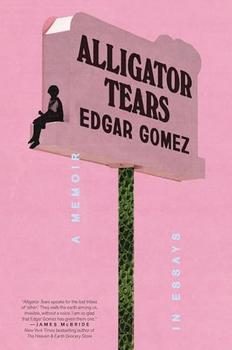
by Edgar Gomez
Published 2025
A darkly comic memoir-in-essays about the scam of the American Dream and doing whatever it takes to survive in the Sunshine State—from the award-winning author of High-Risk Homosexual.

by Carol Smith
Published 2022
A powerful exploration of grief following the death of the author's son that combines memoir, reportage, and lessons in how to heal.

by Judith Schalansky
Published 2021
Each disparate object described in this book - a Caspar David Friedrich painting, a species of tiger, a villa in Rome, a Greek love poem, an island in the Pacific - shares a common fate: it no longer exists, except as the dead end of a paper trail.

 (1).gif)
When all think alike, no one thinks very much
Click Here to find out who said this, as well as discovering other famous literary quotes!

Can you name the title?
Test your book knowledge with our daily trivia challenge!