-
Your next favorite book
is waiting.
Summary | Excerpt | Reading Guide | Discuss | Reviews | Beyond the book | Read-Alikes | Genres & Themes | Author Bio

A Novel
by Bonnie Garmus Book Reviewed by:
A must-read debut! Meet Elizabeth Zott: a "formidable, unapologetic and inspiring" (Parade) scientist in 1960s California whose career takes a detour when she becomes the unlikely star of a beloved TV cooking show in this novel that is "irresistible, satisfying and full of fuel. It reminds you that change takes time and always requires heat" (The New York Times Book Review).
New York Times Bestseller • Good Morning America Book Club • One of NPR's Best Books of 2022 • One of the Most Anticipated Books of the Year—New York Times, Bustle, Real Simple, Parade, CNN, Today, E! News, Library Journal
Chemist Elizabeth Zott is not your average woman. In fact, Elizabeth Zott would be the first to point out that there is no such thing as an average woman. But it's the early 1960s and her all-male team at Hastings Research Institute takes a very unscientific view of equality. Except for one: Calvin Evans; the lonely, brilliant, Nobel–prize nominated grudge-holder who falls in love with—of all things—her mind. True chemistry results.
But like science, life is unpredictable. Which is why a few years later Elizabeth Zott finds herself not only a single mother, but the reluctant star of America's most beloved cooking show Supper at Six. Elizabeth's unusual approach to cooking ("combine one tablespoon acetic acid with a pinch of sodium chloride") proves revolutionary. But as her following grows, not everyone is happy. Because as it turns out, Elizabeth Zott isn't just teaching women to cook. She's daring them to change the status quo.
Laugh-out-loud funny, shrewdly observant, and studded with a dazzling cast of supporting characters, Lessons in Chemistry is as original and vibrant as its protagonist.
Chapter 1
November 1961
Back in 1961, when women wore shirtwaist dresses and joined garden clubs and drove legions of children around in seatbeltless cars without giving it a second thought; back before anyone knew there'd even be a sixties movement, much less one that its participants would spend the next sixty years chronicling; back when the big wars were over and the secret wars had just begun and people were starting to think fresh and believe everything was possible, the thirty-year-old mother of Madeline Zott rose before dawn every morning and felt certain of just one thing: her life was over.
Despite that certainty, she made her way to the lab to pack her daughter's lunch.
Fuel for learning, Elizabeth Zott wrote on a small slip of paper before tucking it into her daughter's lunch box. Then she paused, her pencil in midair, as if reconsidering. Play sports at recess but do not automatically let the boys win, she wrote on another slip. Then she paused again, tapping her pencil ...
What are you reading this week? And what did you think of last week’s books? (11/13/2025)
...little murder mystery with great characters, and it reminded me of https://www.bookbrowse.com/reviews/index.cfm/book_number/4546/lessons-in-chemistry Lessons in Chemistry by Bonnie Garmus. It was a quick, fun read, and like @Lloyd_R , I enjoyed it. I believe it was a recent First Impressions selection, and the book publishes next Tuesd...
-kim.kovacs
What books have you enjoyed so far in 2025, what books are you looking forward to reading?
...lian; The Ride of Her Life by Elizabeth Letts; Remarkably Bright Creatures by Shelby Van Pelt The Book of Everlasting Things by Aanchal Malhotra; and Lessons in Chemistry by Bonnie Garmus
-Sunny
Who's your favorite female author of the 21st century?
Ruta Sepetys and Barbara Kingsolver are automatic buys for me. I hope that Bonnie Garmus writes more books because I definitely enjoyed her debut, Lessons in Chemistry.
-Rebecca_R
Harriet Sloane is an inveterate magazine reader. How do magazines and media shape our culture? And what did Harriet mean when she first told Elizabeth to "recommit"? (p. 147). Is there some dream of yours that you wish you would recommit to?
I agree with Dee's and Shirl's comments about magazines. I think Harriet's comment about recommitting meant that Elizabeth not loose sight of who she is fundamentally- not just in terms of goals, but also in terms of her values and what she wants in life for herself and Maddie.
-Jill_Mercier
Madeline decides that faith isn't based on religion. What role does religion play in the book? Why do Elizabeth, Calvin, and Wakely believe that personal responsibility — faith in one's self — is more important than believing in something greater?
Elizabeth, Calvin and Wakely believe that faith in oneself is more important in than faith in something greater because of life experiences. Elizabeth had a number of life experiences before meeting Calvin that heavily influenced her belief about faith, including a father who did little build spi...
-Jill_Mercier
At Hastings, Calvin wants to help Elizabeth because “life isn’t fair,” while she feels that accepting favors is cheating (p. 26). What’s your opinion of this interchange? Should she have accepted his help? What would you have done?
I am in agreement about Elizabeth's response. And Calvin's comment after he and Elizabeth rowed with the men's team further strengthened my belief that she should reject his help. "He smiled, triumphant: Saved her again – first at work and now this." That comment made me wonder about his motive f...
-Linda_O_donnell
How do you think Elizabeth’s beauty helped or hurt her? Do you feel men are ever similarly judged by their looks? Has this changed since the time period in which the book is set, in your opinion?
I don't think Elizabeth really gave her looks a second thought because she was so focused on science and the goals she wanted to achieve, but I do think her beauty hurt her in that so many had preconceived ideas that beauty and brains don't exist in one body. Whether or not this has changed for w...
-Jill_Mercier
Wakely tells Elizabeth he’s not sure “normal” exists. “Does science recognize normal?”, he asks. “How would you define normal?” (p. 353). What do you think? Is there such a thing as “normal”?
Elizabeth and Wavely's conversation about "normal" reminded me of an article I read recently. Jonathan Mooney, in a very entertaining way, describes where the idea of "normal" comes from. The word was first used in a mathematical context in carpentry – according to rule, meaning according to the ...
-Linda_O_donnell
Why do you believe Mrs. Mudford was so hostile to both Madeline and Amanda?
Your breakdown of the name Mudford is interesting and helpful in further understanding some of the reasons for her rigidity and stereotyping.
-Jill_Mercier
As a child, Elizabeth had no formal education, and yet she was able to self-educate, thanks to her library card. With the advent of technology, do you think libraries are still important to society? If so, why?
The advent of technology has made libraries more important than ever. The touch of my keyboard brings my local library right into my living room. I can search the card catalog for a book, put a hold on it, and pick it up when I'm notified that it is available. I can take on-line courses in a wide...
-Linda_O_donnell
Overall, what did you think of Lessons in Chemistry? (No spoilers, please!)
This was a second reading of the book for me, and although I thoroughly enjoyed it the first time around, I was surprised this time at how much I related to Elizabeth Zott's attitude toward life and humanity in general. I was especially pleased at the way she could challenge a situation with anot...
-Linda_O_donnell
Elizabeth is sometimes depressed by the circumstances in her life, and yet she's never a victim. How does she continually pick herself up? What do you think fuels her resilience? And why, after she's reached stardom, is she more miserable than ever?
I think part of what fuels Elizabeth's resiliency is her uncanny ability to think about life's challenges in scientific terms. It amazed me how much she initially disliked and struggled with rowing. Once Calvin explained that rowing involved physics, she spent time reading about the physics of ro...
-Jill_Mercier
Many male characters are sympathetic to Elizabeth's plight, but most have trouble standing up for women or other minorities in the workplace. Why do good-hearted people have trouble speaking up? And what are the consequences of not doing so?
I think Sunny's comment about people being "fearful for their own livelihood, and sometimes even their life" as well as Carol's comment about "good old boys mentality" are a significant contributing factors. A third factor that seems to impact people speaking up is having unclear moral values. Un...
-Jill_Mercier
Elizabeth refuses to accept limits placed on her by society and insists that others also ignore those limits. How do each of those characters ultimately rise to that challenge? And in what ways have you or others been limited by societal norms?
The character that seemed to really rise above limits set by the teacher was Elizabeth's daughter. Madeline's refusal to accept her teacher's limitations with Madeline's family tree was huge and showed the depth and breadth of Madeline's values.
-Jill_Mercier
Could Elizabeth’s story happen today? How have things changed in the work place then?
I agree that Elizabeth's story remains an issue today. A number of factors make this possible, including pride, misogyny and HR departments that look the other way and/or don't address the issue when it exists.
-Jill_Mercier
All time favorite book club books?
...Rank Book % Respondents 1 A Gentleman in Moscow by Amor Towles (2016, Viking) 8.99% 2 The Women by Kristin Hannah (2024, St. Martin's Press) 4.81% 3 Lessons in Chemistry by Bonnie Garmus (2022, Doubleday) 4.68% 4 Horse by Geraldine Brooks (2022, Viking) 3.92% 5 James by Percival Everett (2024, Doubleday) 3.42% 6 The Nightingale by Kri...
-nick
“Having a baby,” Elizabeth muses, “was a little like living with a visitor from another planet.” (p. 162). What did you think of this statement? If you have children, did this sentiment ring true, in your experience?
Having a baby is 'like living with an alien.' Babies have a lot to learn to become fully functioning people. No two babies or people are alike. We had 2 sons with 2 different personalities so we had to figure out what was best for each of them to thrive.
-Louise_E
Madeline fills her family tree with Sojourner Truth, Amelia Earhart, and Nefertiti to point out that all humans are related. But if humans are 99.9 percent the same, why do we treat each other so differently?
People all over the world seem to have forgotten that truth. Things could be/should be so much better if everyone believed that we are all the same.
-Susan_Roberts
Phil tells Walter that Elizabeth isn’t relatable – but that’s a good thing. “People don’t want to see themselves on TV, they want to see the people they’ll never be on TV.” (p. 202). Do you agree with him?
I would like to see a mix of people on television. I think people who look like you can be more relatable.
-Laura_S1
What are you reading this week? (5/1/2025)
Pride and prejudice (as audiobook) 52 Weeks a party of one - Bianca Pensy Aba Story of my life - Lucy Score Lessons in chemistry - Bonnie Garmus Anything you do say - Gillian McAllister The assistant - Winter K. Willis The Griffin sisters' greatest hits - Jennifer Weiner All very excellent books ...
-Marijana_Bankovic
Harriet questions Elizabeth’s “que será, será approach to parenting.” Do you think she was truly as hands-off as Harriet supposes? What do you think of the way she raised Madeline?
Elizabeth had so much anxiety about parenting when Mad was a newborn but also quickly understood that Mad had enormous capabilities. I don't totally agree with Elizabeth's allowing Mad as much freedom as she did but I think parents today don't allow enough freedom- I see moms who see danger at ev...
-Candace_Broman
After WWII, when men returned to their jobs, what encouraged women to accept their place as only in the home? And why, in today's world, when women are in the workforce in record numbers, are they still doing most of the housework and child-raising?
I agree with the other comments plus think the service members returning to home were so glad to be getting home and the women at home had postponed marriage or having children for so long that all they wanted was to get married/ start or increase the family. I think Americans were happy in a goo...
-Candace_Broman
Can friendships sometimes provide family better than family itself? Walter isn't Amanda's biological father, but he loves her fully. On the other hand, Avery Parker still loves the son she never knew. How do you define family?
I think families are made of people who are respectful of each other and love each other for who they are, love the good things and look past the irritating things. Families care for and about each other and share the same values while respecting different opinions. I have seen families who fight...
-Candace_Broman
Elizabeth refuses to marry Calvin. What did you think of her decision here? How would her life have been different if they’d married?
I understood her desire to be independent, especially because she wanted to be known professionally and not be in anyone's shadow. But…as a reader, I wanted her to realize Calvin loved her so much he would have been supportive. I think her life would have been easier in some ways (not having to d...
-Candace_Broman
Elizabeth tells Harriet she worries that introversion could be a gene mutation, and that both she & Calvin could be carriers (p. 167). Do you think Madeline was an introvert? Do you feel this is an inherited or learned trait?
I agree that Madeline wasn't an introvert, just not comfortable with children her own age. It's too bad her teacher was such a jerk. Had she appreciated how brilliant the child was she could have helped nurture her intellect. I also think that being an introvert is a learned, but one can be predi...
-kim.kovacs
Elizabeth tells her audience that “Courage is the root of change–and change is what we’re chemically designed to do…When you go home today, ask yourself what you will change. And then get started.” Did you find this inspiring and if so, in what ways?
I found these words of Elizabeth's inspiring also. I do think we need to continue to ask ourselves what we will change.
-Shirl
What are you reading this week? (04/24/2025)
Pride and prejudice - Jane Austen 52 weeks a party of one - Bianca Pensy Aba Story of my life - Lucy Score The story she left behind - Patti Callahan Henry Lessons in chemistry - Bonnie Garmus Anything you do say - Gillian McAllister The assistant - Winter K. Willis The Griffin Sisters' Greatest ...
-Marijana_Bankovic
What are you reading this week? (4/17/2025)
I just received my copy of Lessons In Chemistry by Bonnie Garmus in the mail on Friday and am enjoying it. It is more humorous than I anticipated. I am also reading The Music of Bees by Eileen Garvin.
-Dee_Hatcher
What are you reading this week? (04/10/2025)
Ok bear with me: Story of my life by Lucy Score The story she left behind by Patti Callahan Henry Lessons in chemistry by Bonnie Garmus Anything you do say by Gillian McAllister The assistant by Winter K. Willis The firm by John Grisham The Griffin sisters' greatest hits by Jennifer W...
-Marijana_Bankovic
About the Lessons in Chemistry by Bonnie Garmus Discussion category
Please join BookBrowse in our book club discussion of Lessons in Chemistry by Bonnie Garmus
-system
What is your book club reading in 2025?
...AY THE WORLD CAME TO TOWN by Jim Defied - November 2024 THE MAIDENS by Alex Michaelides - December 2024 THE DUTCH HOUSE by Ann Patchet - January 2025 LESSONS IN CHEMISTRY by Bonnie Garmus - February 2025 YOU'LL NEVER KNOW DEAR by Hallie Ephron - March 2025 PARK AVENUE SUMMER by Renee Rosen - April 2025 THE ROARING DAYS OF ZORA LILY Noe...
-Elizabeth

Bonnie Garmus's debut, Lessons in Chemistry, introduces readers to an exceptional woman struggling to succeed in a male-dominated field. Garmus sets her novel in the days before the Equal Rights Amendment and the #MeToo movement, when most men — and many women as well — believed that any woman who dared to enter a traditional men's profession was either "a lightweight or a gold digger," in the author's words. One might assume the novel is a dark, weighty exploration of the sexual discrimination rampant during the 1950s and early 1960s. Amazingly, it's really not; although the book's substance depends largely on this theme, its overall tone is positive and affirming...continued
Full Review
 (766 words)
(Reviewed by Kim Kovacs).
 Claire Lombardo, author of The Most Fun We Ever Had
Lessons in Chemistry is a breath of fresh air—a witty, propulsive, and refreshingly hopeful novel populated with singular characters. This book is an utter delight—wry, warm, and compulsively readable. Maggie Shipstead, author of Great Circle
It's the world versus Elizabeth Zott, an extraordinary woman determined to live on her own terms, and I had no trouble choosing a side. Lessons in Chemistry is a page-turning and highly satisfying tale: zippy, zesty, and Zotty. Nigella Lawson, author of Cook, Eat, Repeat
I loved it and am devastated to have finished it. Rachel Yoder, author of Nightbitch
On par with Beth Harmon of The Queen's Gambit, Elizabeth Zott swept me away with her intellect, honesty, and unapologetic selfhood. Lessons in Chemistry is a story for all the smart girls who refuse to dumb themselves down despite a culture that demands otherwise. Though a creation of the 50s & 60s, Zott is a feminist icon for our time.
Claire Lombardo, author of The Most Fun We Ever Had
Lessons in Chemistry is a breath of fresh air—a witty, propulsive, and refreshingly hopeful novel populated with singular characters. This book is an utter delight—wry, warm, and compulsively readable. Maggie Shipstead, author of Great Circle
It's the world versus Elizabeth Zott, an extraordinary woman determined to live on her own terms, and I had no trouble choosing a side. Lessons in Chemistry is a page-turning and highly satisfying tale: zippy, zesty, and Zotty. Nigella Lawson, author of Cook, Eat, Repeat
I loved it and am devastated to have finished it. Rachel Yoder, author of Nightbitch
On par with Beth Harmon of The Queen's Gambit, Elizabeth Zott swept me away with her intellect, honesty, and unapologetic selfhood. Lessons in Chemistry is a story for all the smart girls who refuse to dumb themselves down despite a culture that demands otherwise. Though a creation of the 50s & 60s, Zott is a feminist icon for our time.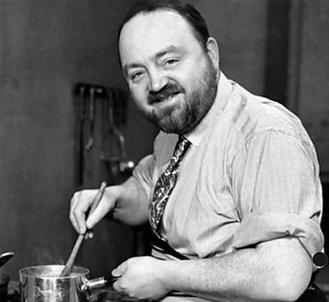 In Lessons In Chemistry, the main character is the reluctant host of a popular TV cooking show.
Gordon Ramsay, Bobby Flay and Rachael Ray are just a few of the many modern TV chefs who’ve become household names. Cooking shows are now not only daytime television staples; they're featured in the primetime lineup. Such was not always the case.
The first cooking shows were produced for the radio. Dr. Édouard de Pomiane, a French food scientist and writer, hosted what's likely the first, starting in 1923. His weekly program on Radio Paris featured stories about his experiences in the kitchen as well as recipes for home cooks.
U.S. advertisers soon took notice of the program's popularity. In 1921, food ...
If you liked Lessons in Chemistry, try these:

by Kerri Maher
Published 2024
A dramatic and inspiring novel based on the true story of the Jane Collective and the brave women who fought for our right to choose, from the USA Today bestselling author of The Paris Bookseller.

by Ramona Ausubel
Published 2024
A playful, witty, and resonant novel in which a single mother and her two teen daughters engage in a wild scientific experiment and discover themselves in the process, from the award-winning writer of Sons and Daughters of Ease and Plenty

by Kate Zernike
Published 2024
From the Pulitzer Prize–winning journalist who broke the story, the inspiring account of the sixteen female scientists who forced MIT to publicly admit it had been discriminating against its female faculty for years—sparking a nationwide reckoning with the pervasive sexism in science.
 (1).gif)
When I get a little money I buy books...
Click Here to find out who said this, as well as discovering other famous literary quotes!

Can you name the title?
Test your book knowledge with our daily trivia challenge!