-
Your next favorite book
is waiting.
Summary | Excerpt | Reviews | Beyond the book | Read-Alikes | Genres & Themes | Author Bio

A Novel
by Salman Rushdie Book Reviewed by:
The epic tale of a woman who breathes a fantastical empire into existence, only to be consumed by it over the centuries—from the transcendent imagination of Booker Prize–winning, internationally bestselling author Salman Rushdie.
In the wake of an unimportant battle between two long-forgotten kingdoms in fourteenth-century southern India, a nine-year-old girl has a divine encounter that will change the course of history. After witnessing the death of her mother, the grief-stricken Pampa Kampana becomes a vessel for a goddess, who begins to speak out of the girl's mouth. Granting her powers beyond Pampa Kampana's comprehension, the goddess tells her that she will be instrumental in the rise of a great city called Bisnaga—"victory city"—the wonder of the world.
Over the next 250 years, Pampa Kampana's life becomes deeply interwoven with Bisnaga's, from its literal sowing from a bag of magic seeds to its tragic ruination in the most human of ways: the hubris of those in power. Whispering Bisnaga and its citizens into existence, Pampa Kampana attempts to make good on the task that the goddess set for her: to give women equal agency in a patriarchal world. But all stories have a way of getting away from their creator, and Bisnaga is no exception. As years pass, rulers come and go, battles are won and lost, and allegiances shift, the very fabric of Bisnaga becomes an ever more complex tapestry—with Pampa Kampana at its center.
Brilliantly styled as a translation of an ancient epic, Victory City is a saga of love, adventure, and myth that is in itself a testament to the power of storytelling.
1
On the last day of her life, when she was two hundred and forty-seven years old, the blind poet, miracle worker, and prophetess Pampa Kampana completed her immense narrative poem about Bisnaga and buried it in a clay pot sealed with wax in the heart of the ruined Royal Enclosure, as a message to the future. Four and a half centuries later we found that pot and read for the first time the immortal masterpiece named the Jayaparajaya, meaning "Victory and Defeat," written in the Sanskrit language, as long as the Ramayana, made up of twenty-four thousand verses, and we learned the secrets of the empire she had concealed from history for more than one hundred and sixty thousand days. We knew only the ruins that remained, and our memory of its history was ruined as well, by the passage of time, the imperfections of memory, and the falsehoods of those who came after. As we read Pampa Kampana's book the past was regained, the Bisnaga Empire was reborn as it truly had been, its women ...
Rushdie's account of the history of Bisnaga is truly interesting and entertaining. Sometimes his strokes are too broad and his movement too plodding, but for the most part there are interesting characters, engaging dialogue and enough detail to flesh out the world without being overwhelming. And the novel works as a subtle satire of contemporary politics—especially in its observations about dictatorial leaders, and about religion as a tool of social control and oppression—but isn't overpowered by that reading. Despite Pampa's mission of equality, her writing and her actions aren't exactly feminist. This hypocrisy is, I imagine, an intentional part of Pampa's character. Her political imagination is limited—she's blessed with enough power and wisdom to play politics well in a patriarchal monarchy, but not enough to transform society into a feminist utopia, or even, it seems, to imagine what that might look like. Victory City reads often like a cynical satire of the liberal project. But some of Rushdie's other choices seem to transcend this winking hypocrisy and become gleefully misogynistic...continued
Full Review
 (1258 words)
(Reviewed by Chloe Pfeiffer).
 A. M. Homes
Salman Rushdie is a genius and I wish he could read me a story—or a chapter of his book—every night before bed. The scale and scope of his intellect and his imagination is googolplex, as big as infinity and then some. In Victory City, he spins an epic tale that brings us back to the key questions of what it is to be human, to be authentic, to love and to grieve. Colum McCann
Salman Rushdie has created a radiant myth about mythmaking. Victory City is a book that privileges the ethical imagination and the unmistakable permanence of storytelling. Within these pages, you will find global travelers, rapacious kings, cave dwellers, prophets of doom, and, at its fierce and eloquent heart, a storyteller who reminds us that death may take away a lot of things, but never the power of our words. Beyond war, beyond violence, even beyond life itself, the story, and the storyteller, last.
" Gary Shteyngart
No one, and I mean no one, can bring an entire world to life with the authority, wisdom, humor, and panache of Salman Rushdie. In the pantheon of his novels, Victory City stands out as book of particular imaginative achievement. It defies category, but it invites pleasure. Michael Cunningham
Victory City is vast and deep, soaring and scintillating. Every page is magical, every page is gorgeous. In the way of a significant work of art, it does not resemble any other novel I could name ... A major accomplishment by one of our greatest living writers.
A. M. Homes
Salman Rushdie is a genius and I wish he could read me a story—or a chapter of his book—every night before bed. The scale and scope of his intellect and his imagination is googolplex, as big as infinity and then some. In Victory City, he spins an epic tale that brings us back to the key questions of what it is to be human, to be authentic, to love and to grieve. Colum McCann
Salman Rushdie has created a radiant myth about mythmaking. Victory City is a book that privileges the ethical imagination and the unmistakable permanence of storytelling. Within these pages, you will find global travelers, rapacious kings, cave dwellers, prophets of doom, and, at its fierce and eloquent heart, a storyteller who reminds us that death may take away a lot of things, but never the power of our words. Beyond war, beyond violence, even beyond life itself, the story, and the storyteller, last.
" Gary Shteyngart
No one, and I mean no one, can bring an entire world to life with the authority, wisdom, humor, and panache of Salman Rushdie. In the pantheon of his novels, Victory City stands out as book of particular imaginative achievement. It defies category, but it invites pleasure. Michael Cunningham
Victory City is vast and deep, soaring and scintillating. Every page is magical, every page is gorgeous. In the way of a significant work of art, it does not resemble any other novel I could name ... A major accomplishment by one of our greatest living writers.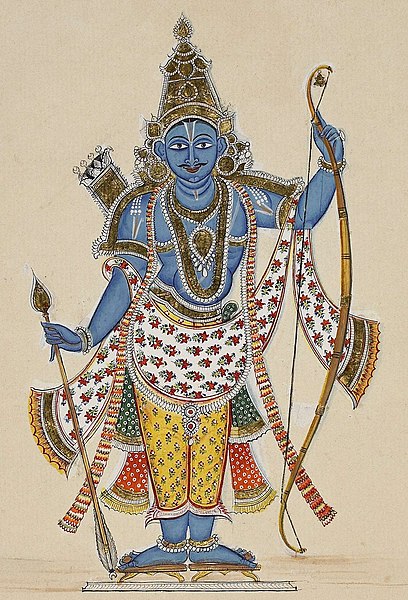 The Ramayana, which translates from Sanskrit as "Rama's Journey," is one of the two great epic poems of India and a foundational text of Hinduism; the other is the Mahabharata, which is longer and means "Great Epic of the Bharata Dynasty." The Ramayana was composed by the poet Valmiki, probably around the 5th century BCE, though sources vary on this. The poem is split into seven parts; the first and last parts are believed to be later additions. Some of the Ramayana is thought to have taken place at or near the capital of the Vijayanagara Empire—the setting of Salman Rushdie's novel Victory City—and the empire's art and architecture were strongly inspired by the poem.
The Ramayana tells the story of Rama, the son of a ...
If you liked Victory City, try these:

Madame Sosostris and the Festival for the Brokenhearted
by Ben Okri
Published 2025
In this modern fable with the impish magic of A Midsummer Night's Dream, a masked ball makes two upper-class British couples see each other in a new light.
A wise, enchanting novel about love, power, and our many selves—past and future, public and private—from the Booker Prize–winning author.
by Elizabeth Gonzalez James
Published 2025
A dazzling magical realism western in the vein of Cormac McCarthy meets Gabriel García Márquez, The Bullet Swallower follows a Mexican bandido as he sets off for Texas to save his family, only to encounter a mysterious figure who has come, finally, to collect a cosmic debt generations in the making.

by Tania James
Published 2024
A spellbinding historical novel set in the eighteenth century: a hero's quest, a love story, the story of a young artist coming of age, and an exuberant heist adventure that traces the bloody legacy of colonialism across two continents and fifty years. A wildly inventive, irresistible feat of storytelling from a writer at the height of her powers.
 (1).gif)
Too often we enjoy the comfort of opinion without the discomfort of thought.
Click Here to find out who said this, as well as discovering other famous literary quotes!

Can you name the title?
Test your book knowledge with our daily trivia challenge!