
-
Your next favorite book
is waiting.
Summary | Excerpt | Reviews | Beyond the book | Read-Alikes | Genres & Themes | Author Bio
 Book Reviewed by:
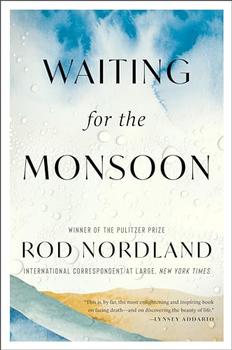
A legendary New York Times war correspondent delivers his unforgettable final dispatch: a deeply moving meditation on life inspired by his sudden battle with terminal brain cancer.
For thirty years, Rod Nordland shadowed death. As one of his generation's preeminent war correspondents, he reported in over 150 countries, many of which were in violent upheaval, and was no stranger to witnessing tragedy. But in summer 2019, during the height of India's erratic monsoon season, Nordland was suddenly faced with a tragedy of his own: he collapsed in the middle of a morning jog, was rushed to the hospital, and diagnosed with a fatal brain tumor.
After decades chasing conflicts across the globe, Nordland, now confined to a hospital bed, found the strength to face more personal conflicts. He reconnected with his estranged children and became closer with them than he ever thought possible. He repaired a friendship with a best friend that had been broken for twenty years. The arrogance and certitude that dominated his every action was replaced by a lucid sense of humility and generosity that persisted even after he left the hospital. Norland's tragedy became, in his own words, "a gift that has enriched my life."
Waiting for the Monsoon is the exemplary story of confronting death with both eyes open, and of the human capacity to persevere even in the most difficult of times. With tremendous clarity, grace, and courage, Nordland has delivered a powerful final assignment, revealing how facing the unknown can transform experience and change our relationship to the world around us.
My Second Life
The following article was written from my bed in the Weill Cornell Medical Center's neurology ICU and published on a full page of the Sunday edition of the New York Times.
I routinely give titles to my journals, in which I have long recorded interviews, appointments, odd thoughts, and cris de coeur. My journal commencing June 17, 2019, is called "Waiting for the Monsoon."
The Indian summer has always fascinated me, and I was in New Delhi, experiencing its climatic extremes firsthand.
Summer is when the heat of the subcontinent's vast plains generates an enormous mass of warm air that pushes against the impenetrable massif of the Himalayas to the north, while the west wind drives clouds from the broiling Arabian Sea across the country.
Heat builds to inhuman levels: days of 125 degrees Fahrenheit are not unheard-of; 110-degree days, or 43 Celsius, are common, with humidity sometimes approaching 100 ...
The title of Rod Nordland's autobiography could be a metaphor for the death he knows is coming for him after a stage 4 glioblastoma diagnosis, or for any of the many crises he has faced in his eventful life as a foreign correspondent for the Philadelphia Inquirer, Newsweek, and the New York Times. But it's also literal: in July 2019, he was reporting in India just before its rainy season began. A bystander found him suffering from a grand mal seizure and hailed an ambulance. At the hospital, doctors discovered a brain tumor and he was medevacked to New York City's Weill Cornell Medical Center for surgery, which took place on his 70th birthday. Afterwards, his surgeon was frank, telling Nordland he might get 15 more months, but that brain cancer would kill him eventually. "Waiting for the Monsoon" was the title he gave to the journal, and then the New York Times article, he wrote about his experience...continued
Full Review
 (798 words)
(Reviewed by Rebecca Foster).
 Jill Abramson, former executive editor of The New York Times and author of Merchants of Truth
An unforgettable, moving book by an intrepid foreign correspondent for The New York Times. Though Nordland spent a career witnessing death on the battlefield, it is his own experience with a deadly illness that teaches him how to live with gratitude rather than hubris. It is a deeply personal story that will help readers recognize the urgency of repairing their most important relationships and what really matters in life. Lynsey Addario, Pulitzer Prize-winning photojournalist, Macarthur Fellowship recipient, and New York Times bestselling author of It's What I Do: A Photographer's Life of Love and War
This is, by far, the most enlightening and inspiring book on facing death—and on discovering the beauty of life. ...One of the most intrepid and talented war correspondents of the past four decades, Rod Nordland has written a love letter to his second chance at life. ... An extraordinary tale of the power of the mind to survive—in war and in the face of the prognosis of one's own death. Mark Bowden, author of Black Hawk Down
Powerful...Waiting for the Monsoon shows the life of a foreign correspondent to be both as vital and seductive as ever.
Jill Abramson, former executive editor of The New York Times and author of Merchants of Truth
An unforgettable, moving book by an intrepid foreign correspondent for The New York Times. Though Nordland spent a career witnessing death on the battlefield, it is his own experience with a deadly illness that teaches him how to live with gratitude rather than hubris. It is a deeply personal story that will help readers recognize the urgency of repairing their most important relationships and what really matters in life. Lynsey Addario, Pulitzer Prize-winning photojournalist, Macarthur Fellowship recipient, and New York Times bestselling author of It's What I Do: A Photographer's Life of Love and War
This is, by far, the most enlightening and inspiring book on facing death—and on discovering the beauty of life. ...One of the most intrepid and talented war correspondents of the past four decades, Rod Nordland has written a love letter to his second chance at life. ... An extraordinary tale of the power of the mind to survive—in war and in the face of the prognosis of one's own death. Mark Bowden, author of Black Hawk Down
Powerful...Waiting for the Monsoon shows the life of a foreign correspondent to be both as vital and seductive as ever. Rationally, we all know death is coming, but how many truly believe it? Most people only accept the inevitability when forced to by accident or terminal illness. Ironically, such a diagnosis can lend a new lease on life, as it did for Rod Nordland, author of Waiting for the Monsoon. Rereading E.M. Forster's Howards End recently, I came across the line "Death destroys a man, but the idea of death saves him" – maybe the confirmation of mortality is the spur we need to live courageously and with abandon.
"Terminal" doesn't always mean death is imminent, after all. Australian author Clive James published 10 books of poetry and essays between a terminal leukemia diagnosis and his death, while poet Christian Wiman has produced six books...
If you liked Waiting for the Monsoon, try these:
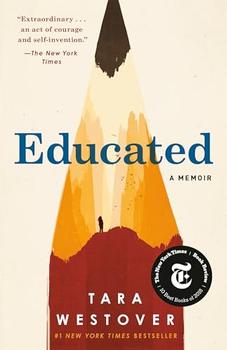
by Tara Westover
Published 2022
Winner of the 2018 BookBrowse Nonfiction Award
An unforgettable memoir about a young girl who, kept out of school, leaves her survivalist family and goes on to earn a PhD from Cambridge University.
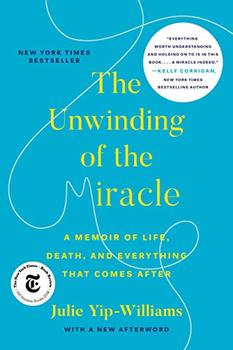
by Julie Yip-Williams
Published 2020
As a young mother facing a terminal diagnosis, Julie Yip-Williams began to write her story, a story like no other. What began as the chronicle of an imminent and early death became something much more - a powerful exhortation to the living.

by Lindsey Hilsum
Published 2019
The devastating biography of Marie Colvin, the foremost war reporter of her generation, who was killed in Syria in 2012.

 (1).gif)
Harvard is the storehouse of knowledge because the freshmen bring so much in and the graduates take so little out.
Click Here to find out who said this, as well as discovering other famous literary quotes!

Can you name the title?
Test your book knowledge with our daily trivia challenge!