
-
Your next favorite book
is waiting.
Summary | Excerpt | Reviews | Beyond the book | Read-Alikes | Genres & Themes | Author Bio
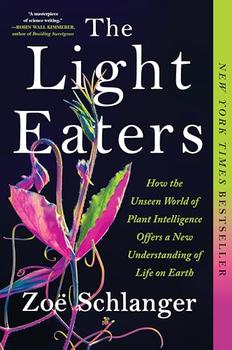
How the Unseen World of Plant Intelligence Offers a New Understanding of Life on Earth
by Zoë Schlanger Book Reviewed by:
Award-winning Atlantic staff writer Zoë Schlanger delivers a groundbreaking work of popular science that probes the hidden world of the plant kingdom and reveals the astonishing capabilities of the green life all around us.
It takes tremendous biological creativity to be a plant. To survive and thrive while rooted in a single spot, plants have adapted ingenious methods of survival. In recent years, scientists have learned about their ability to communicate, recognize their kin and behave socially, hear sounds, morph their bodies to blend into their surroundings, store useful memories that inform their life cycle, and trick animals into behaving to their benefit, to name just a few remarkable talents.
The Light Eaters is a deep immersion into the drama of green life and the complexity of this wild and awe-inspiring world that challenges our very understanding of agency, consciousness, and intelligence. In looking closely, we see that plants, rather than imitate human intelligence, have perhaps formed a parallel system. What is intelligent life if not a vine that grows leaves to blend into the shrub on which it climbs, a flower that shapes its bloom to fit exactly the beak of its pollinator, a pea seedling that can hear water flowing and make its way toward it? Zoë Schlanger takes us across the globe, digging into her own memories and into the soil with the scientists who have spent their waking days studying these amazing entities up close.
What can we learn about life on Earth from the living things that thrive, adapt, consume, and accommodate simultaneously? More important, what do we owe these life forms once we come to understand their rich and varied abilities? Examining the latest epiphanies in botanical research, Schlanger spotlights the intellectual struggles among the researchers conceiving a wholly new view of their subject, offering a glimpse of a field in turmoil as plant scientists debate the tenets of ongoing discoveries and how they influence our understanding of what a plant is.
We need plants to survive. But what do they need us for—if at all? An eye-opening and informative look at the ecosystem we live in, this book challenges us to rethink the role of plants—and our own place—in the natural world.
Prologue
I am walking along a dim path. Thick hillocks of moss undulate fuzzily around me. I look up, and am dwarfed by pillars of dank and slimy wood. The earth below me is damp, has give. A sign on the path tells me to be alert for aggressive elk in the area. I see no elk, I keep walking. Plumes emerge, sword ferns with their curled fiddleheads the size of a baby's fist covered in velvety auburn hair, the unexpected prequel to the arching fronds that will fountain out above them like peacock feathers. Moss drips in long fingers from branches overhead. Fungi arc skyward from a downed tree. Everything seems to strain upward and downward and outward at once.
I intrude on all this, but no one notices. All things here are so thoroughly absorbed into their own living that I am like an ant slipping discreetly through a sponge. The lichens crawling up the base of trees curl the edges of their disklike bodies up, catching drops as they receive a new day and another chance to grow.
I am in the ...
The human race is completely dependent on plants. Many people, however, give little thought to plants' importance, often seeing them as closer to inanimate objects than fellow living things. Science journalist Zoë Schlanger challenges that view in her engrossing book The Light Eaters, which explores current knowledge of how plants experience the world around them. Schlanger's book offers an engrossing view into the plant world, focusing not on plants' utility to humans or humans' ecosystems, but on how they experience and interact with the world around them. I would recommend The Light Eaters to readers of popular science regardless of whether they have any particular interest in plants, as I think it's likely to spark that interest if they don't possess it already...continued
Full Review
 (565 words)
(Reviewed by Katharine Blatchford).
 David George Haskell, author of Sounds Wild and Broken, The Songs of Trees, and The Forest Unseen
A brilliant must-read about the marvels of the green world. This book shook and changed me, revealing plant intelligence as more strange and wondrous than I could imagine. Zoë Schlanger's explorations brim with curiosity and every page brings new revelation and insight. Ed Yong, Pulitzer Prize-winning author of An Immense World and I Contain Multitudes
I'll never look at plants—or the natural world—in the same way again, after reading Zoë Schlanger's stunning book. Instead of trying to ram the square peg of botanical life into the round holes of human biology and metaphors, Schlanger instead considers plants on their own terms, as they actually are. The result is mesmerizing, world-expanding, and achingly beautiful. Elizabeth Kolbert, author of Under a White Sky and The Sixth Extinction
Like its subject, The Light Eaters is rich, vital, and full of surprises. Read it! You will look at the world in a new way. Robin Wall Kimmerer, author of Braiding Sweetgrass: Indigenous Wisdom, Scientific Knowledge and the Teachings of Plants
The Light Eaters is a masterpiece of science writing. Burning with open-minded curiosity, this exploration of the emerging revolution in plant science will challenge what you think you know and ignite a new way of seeing the plant world. Part detective story, part field trip and part philosophy, this brilliant book stretches the mind, toward a profound new understanding of the sophistication of under-appreciated plants. I feel it as an antidote to arrogance, as it engenders humility, respect and awe for the light eaters who make the world.
David George Haskell, author of Sounds Wild and Broken, The Songs of Trees, and The Forest Unseen
A brilliant must-read about the marvels of the green world. This book shook and changed me, revealing plant intelligence as more strange and wondrous than I could imagine. Zoë Schlanger's explorations brim with curiosity and every page brings new revelation and insight. Ed Yong, Pulitzer Prize-winning author of An Immense World and I Contain Multitudes
I'll never look at plants—or the natural world—in the same way again, after reading Zoë Schlanger's stunning book. Instead of trying to ram the square peg of botanical life into the round holes of human biology and metaphors, Schlanger instead considers plants on their own terms, as they actually are. The result is mesmerizing, world-expanding, and achingly beautiful. Elizabeth Kolbert, author of Under a White Sky and The Sixth Extinction
Like its subject, The Light Eaters is rich, vital, and full of surprises. Read it! You will look at the world in a new way. Robin Wall Kimmerer, author of Braiding Sweetgrass: Indigenous Wisdom, Scientific Knowledge and the Teachings of Plants
The Light Eaters is a masterpiece of science writing. Burning with open-minded curiosity, this exploration of the emerging revolution in plant science will challenge what you think you know and ignite a new way of seeing the plant world. Part detective story, part field trip and part philosophy, this brilliant book stretches the mind, toward a profound new understanding of the sophistication of under-appreciated plants. I feel it as an antidote to arrogance, as it engenders humility, respect and awe for the light eaters who make the world.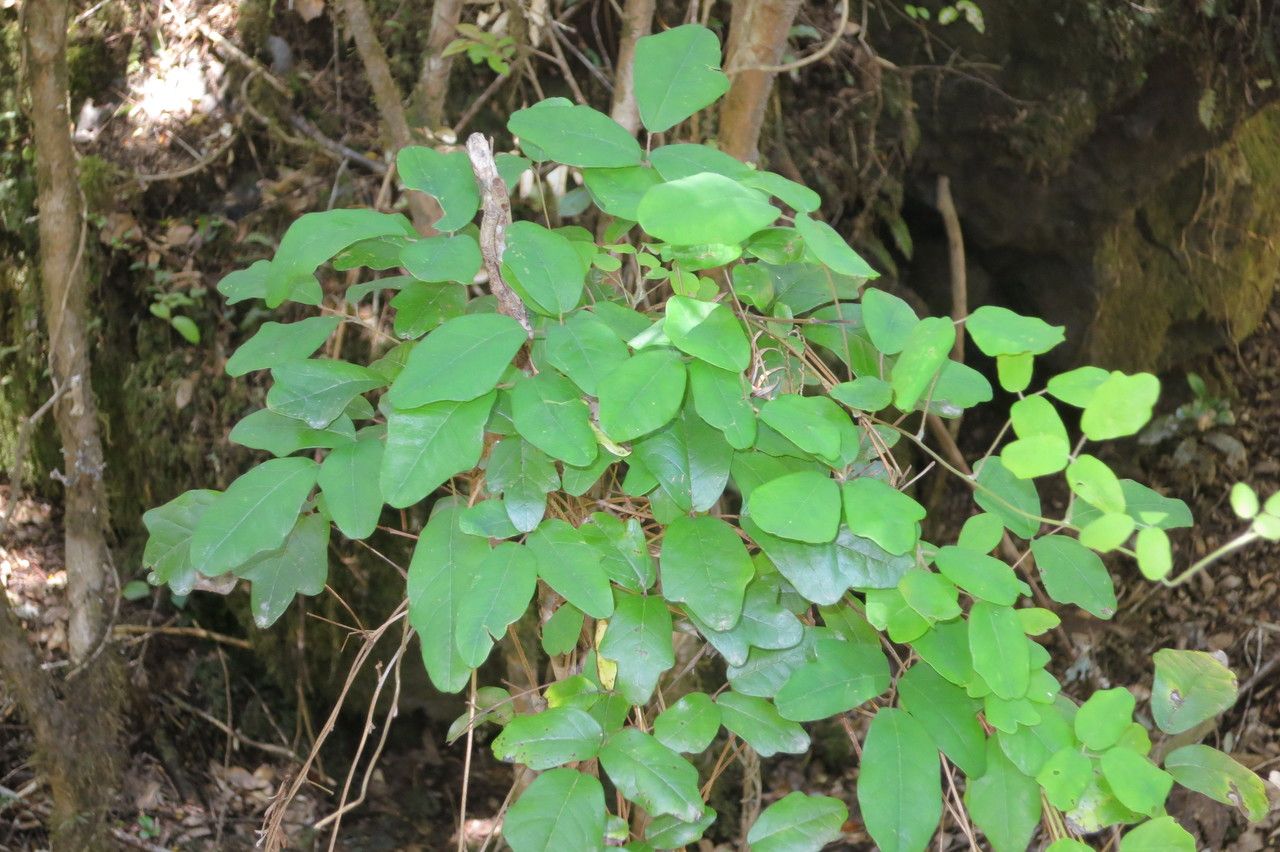 Zoe Schlanger's popular science book The Light Eaters goes in-depth on several remarkable plants, one of which is the climbing vine Boquila trifoliolata. This woody vine, found in the temperate rainforests of Chile and Argentina, has a unique strategy for hiding from herbivores—in order to blend in, it changes the shape of its leaves to match those of other nearby plants.
B. trifoliolata was first described in the 1800s, but its imitative abilities are a much more recent discovery. In 2014, Ernesto Gianoli and Fernando Carrasco-Urra published a report in Current Biology showing that the vine mimicked the leaf shape of eight different host plants. In the years since, that number has increased to more than 20 species. This vine ...
If you liked The Light Eaters, try these:

by Jessica J. Lee
Published 2025
A prize-winning memoirist and nature writer turns to the lives of plants entangled in our human world to explore belonging, displacement, identity, and the truths of our shared future

by Tao Leigh Goffe
Published 2025
A groundbreaking investigation of the Caribbean as both an idyll in the American imagination and a dark laboratory of Western experimentation, revealing secrets to racial and environmental progress that impact how we live today.

by Jackie Higgins
Published 2022
Perfect for fans of The Soul of an Octopus and The Genius of Birds, this remarkable book explores how we process the world around us by analyzing the incredible sensory capabilities of thirteen animals and reveals that we are not limited to merely five senses.


 (1).gif)
Heaven has no rage like love to hatred turned, Nor hell a fury like a woman scorned.
Click Here to find out who said this, as well as discovering other famous literary quotes!

Can you name the title?
Test your book knowledge with our daily trivia challenge!