
-
Your next favorite book
is waiting.
Summary | Excerpt | Discuss | Reviews | Beyond the book | Read-Alikes | Genres & Themes | Author Bio
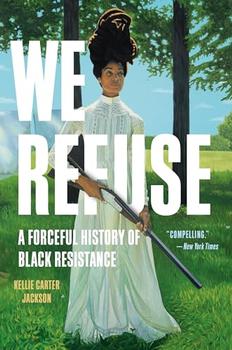
A Forceful History of Black Resistance
by Kellie Carter Jackson Book Reviewed by:
A radical reframing of the past and present of Black resistance—both nonviolent and violent—to white supremacy.
Black resistance to white supremacy is often reduced to a simple binary, between Dr. Martin Luther King Jr.'s nonviolence and Malcolm X's "by any means necessary." In We Refuse, historian Kellie Carter Jackson urges us to move past this false choice, offering an unflinching examination of the breadth of Black responses to white oppression, particularly those pioneered by Black women.
The dismissal of "Black violence" as an illegitimate form of resistance is itself a manifestation of white supremacy, a distraction from the insidious, unrelenting violence of structural racism. Force—from work stoppages and property destruction to armed revolt—has played a pivotal part in securing freedom and justice for Black people since the days of the American and Haitian Revolutions. But violence is only one tool among many. Carter Jackson examines other, no less vital tactics that have shaped the Black struggle, from the restorative power of finding joy in the face of suffering to the quiet strength of simply walking away.
Clear-eyed, impassioned, and ultimately hopeful, We Refuse offers a fundamental corrective to the historical record, a love letter to Black resilience, and a path toward liberation.
In December 1934, W. E. B. Du Bois completed what I believe is the crowning jewel of his scholarship, Black Reconstruction in America, 1860–1880. With over seven hundred pages of forceful writing, the book is a sweeping narrative that centers the contributions of Black men and women who fought to liberate the enslaved during the Civil War and, afterward, to reconstruct the United States as a democracy that would uphold and protect workers and their labor. On the first page, Du Bois writes a letter to his readers, a preface of sorts, in which he claims this is a book for those who believe Black people are human beings. "If [the reader] believes that the Negro in America and in general is an average and ordinary human being, who under [a] given environment develops like other human beings, then he will read this story and judge it by the facts adduced. If, however, he regards the Negro as a distinctly inferior creation, who can never successfully take part in modern civilization ...
What are you reading this week? (04/10/2025)
I'm reading Daughters of Shandong and having read The Mountain Sings by Nguyễn Phan Quế Mai I endorse BookBrowse's choice of it as a Read Alike for Daughters of Shandong. I would also suggest The Dragons, The Giant, The Women by Wayetu Moore. Both are superb memoirs that increased my knowledge of...
-Robin_G
The chapters in We Refuse focus on five distinct (though often enmeshed) forms of Black resistance to white supremacist oppression: revolution, protection, force, flight, and joy. In the opening chapter, Jackson focuses on the Haitian Revolution in particular as an example of a radical and systemic transformation of a society through the use of violence, detailing the overthrow of the French colonizers by an armed, organized, and motivated populace (and led by the indefatigable Toussaint Louverture). She contrasts this event with the American Revolution, which she declares a misnomer given that its instigators and soldiers fought for the freedom of only a segment of society: "Washington was not fighting for revolution; he was fighting for independence from Britain." The anecdotes throughout the book focused on individual courage are often the most dynamic. The chapter on force narrates the stories of Carrie Johnson, a teenage girl who defended her home with a gun from a white mob during a riot in Washington, D.C.; and Daisy Bates, who established her house as an armed and fortified compound to protect the first students integrating Little Rock, Arkansas's Central High School...continued
Full Review
 (777 words)
(Reviewed by Lisa Butts).
 Elizabeth Hinton, author of America on Fire
From one of our generation's most exciting historians, We Refuse changes the way we understand the contours and legacy of the Black freedom struggle. Blending fierce analysis with touching personal vignettes, Kellie Carter Jackson's essential new book enhances the most pressing debates of our time and will stay with readers long after they finish. Kerri K. Greenidge, author of The Grimkes
What does it mean to use violence as a means of resistance? How has violent resistance shaped Black radical freedom movements, despite the popular notion that peaceful pleas for humanity or moderate negotiations with white supremacist oppression are the only path to racial justice? In We Refuse, Kellie Carter Jackson provides a cogent, provocative, and ultimately inspiring re-evaluation of how violence—in all its forms—has been used by Black people to resist slavery and its afterlives. Both radical history and racial reckoning, this book is sure to become a canonical text. Through extensive research and brilliant analysis of Black communities and our politics, We Refuse is a timely re-writing of the African American past, one that forces us to reframe our discussion of our beloved civil rights icons, our assumptions about our politics, and our collective understanding of what it means to resist. Robin D. G. Kelley, author of Freedom Dreams
Kellie Carter Jackson is fearless. She is not afraid to tell you want she thinks, share what she knows, or challenge prevailing wisdom. We Refuse is proof. She taps the wellsprings of memory, archives, oral histories, literature, imagination, and personal experience to tell a very Black story of armed resistance, strategic retreat, unbreakable resolve, and joyous rapture. Reading this book will cause discomfort in some folks, provoke cheers in others. But I doubt anyone will be able to put it down.
Elizabeth Hinton, author of America on Fire
From one of our generation's most exciting historians, We Refuse changes the way we understand the contours and legacy of the Black freedom struggle. Blending fierce analysis with touching personal vignettes, Kellie Carter Jackson's essential new book enhances the most pressing debates of our time and will stay with readers long after they finish. Kerri K. Greenidge, author of The Grimkes
What does it mean to use violence as a means of resistance? How has violent resistance shaped Black radical freedom movements, despite the popular notion that peaceful pleas for humanity or moderate negotiations with white supremacist oppression are the only path to racial justice? In We Refuse, Kellie Carter Jackson provides a cogent, provocative, and ultimately inspiring re-evaluation of how violence—in all its forms—has been used by Black people to resist slavery and its afterlives. Both radical history and racial reckoning, this book is sure to become a canonical text. Through extensive research and brilliant analysis of Black communities and our politics, We Refuse is a timely re-writing of the African American past, one that forces us to reframe our discussion of our beloved civil rights icons, our assumptions about our politics, and our collective understanding of what it means to resist. Robin D. G. Kelley, author of Freedom Dreams
Kellie Carter Jackson is fearless. She is not afraid to tell you want she thinks, share what she knows, or challenge prevailing wisdom. We Refuse is proof. She taps the wellsprings of memory, archives, oral histories, literature, imagination, and personal experience to tell a very Black story of armed resistance, strategic retreat, unbreakable resolve, and joyous rapture. Reading this book will cause discomfort in some folks, provoke cheers in others. But I doubt anyone will be able to put it down.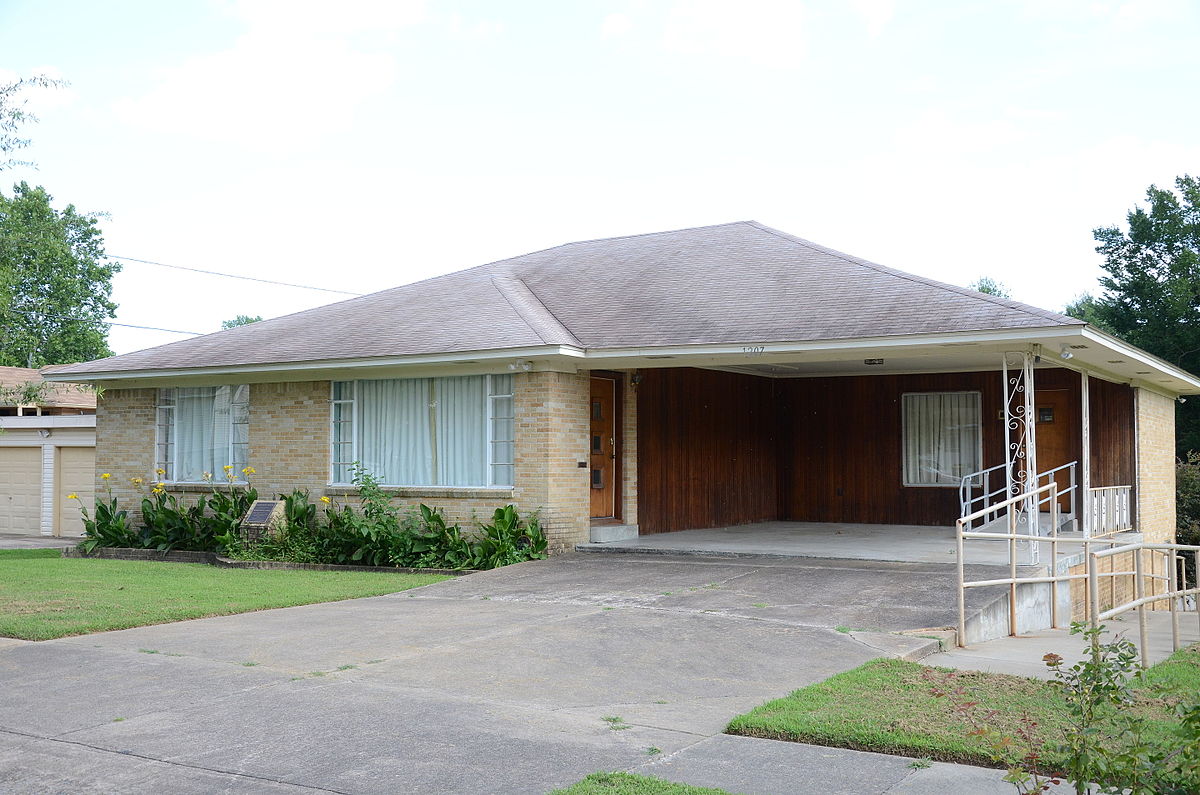 In We Refuse, Kellie Carter Jackson recalls the courageous and tireless efforts of civil rights activist Daisy Bates and her husband, L.C., to integrate schools in Little Rock, Arkansas. The Bates home became a place of refuge for the students known as the "Little Rock Nine" — the first group of Black children to attend the previously all-white Central High School — and their families, putting the couple at constant risk of violent retribution.
Born Daisy Gatson in Huttig, Arkansas in 1914, Bates's life was marked by white supremacist violence almost immediately — her mother was sexually assaulted and murdered by a group of white men when Daisy was a baby, and she was subsequently raised by family friends. She ...
If you liked We Refuse, try these:

by Ashley Hope Pérez
Published 2025
A dazzling YA anthology that spotlights the transformative power of books while equipping teens to fight for the freedom to read, featuring the voices of 15 diverse, award-winning authors and illustrators.
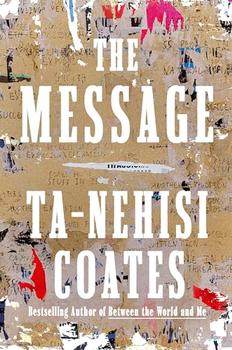
by Ta-Nehisi Coates
Published 2024
The #1 New York Times bestselling author of Between the World and Me journeys to three resonant sites of conflict to explore how the stories we tell—and the ones we don't—shape our realities.

A Passionate Mind in Relentless Pursuit
by Noliwe Rooks
Published 2024
An intimate and searching account of the life and legacy of one of America's towering educators, a woman who dared to center the progress of Black women and girls in the larger struggle for political and social liberation.

 (1).gif)
I always find it more difficult to say the things I mean than the things I don't.
Click Here to find out who said this, as well as discovering other famous literary quotes!

Can you name the title?
Test your book knowledge with our daily trivia challenge!