
-
Your next favorite book
is waiting.
Summary | Excerpt | Reviews | Read-Alikes | Genres & Themes | Author Bio

500 Years of Western Cultural Life, 1500 to the Present
by Jacques BarzunA stunning five-century study of civilization's cultural retreat." - New York Times.
Highly regarded here and abroad for some thirty works of cultural history and criticism, master historian Jacques Barzun has now set down in one continuous narrative the sum of his discoveries and conclusions about the whole of Western culture since 1500.
In this account, Barzun describes what Western Man wrought from the Renaisance and Reformation down to the present in the double light of its own time and our pressing concerns. He introduces characters and incidents with his unusual literary style and grace, bringing to the fore those that have "Puritans as Democrats," "The Monarch's Revolution," "The Artist Prophet and Jester"--show the recurrent role of great themes throughout the eras.
The triumphs and defeats of five hundred years form an inspiring saga that modifies the current impression of one long tale of oppression by white European males. Women and their deeds are prominent, and freedom (even in sexual matters) is not an invention of the last decades. And when Barzun rates the present not as a culmination but a decline, he is in no way a prophet of doom. Instead, he shows decadence as the creative novelty that will burst forth--tomorrow or the next day.
Only after a lifetime of separate studies covering a broad territory could a writer create with such ease the synthesis displayed in this magnificent volume.
The West Torn Apart
The Modern Era begins, characteristically, with a revolution. It is commonly called the Protestant Reformation, but the train of events starting early in the 16C and ending - if indeed it has ended - more than a century later has all the features of a revolution. I take these to be: the violent transfer of power and property in the name of an idea.
We have got into the habit of calling too many things revolutions. Given a new device or practice that changes our homely habits, we exclaim: "revolutionary!" But revolutions change more than personal habits or a widespread practice. They give culture a new face. Between the great upheaval of the 1500s and the present, only three later ones are of the same order. True, the history books give the name to a dozen or more such violent events, but in these uprisings it was only the violence that was great. They were but local aftershocks of one or other of the four main quakes: the 16C religious revolution; the 17C ...
 Alistair Cooke
This astonishing and monumental work may fairly take its place alongside Gibbon, and for much the same array of qualities a majestic view of five hundred years of history, down in great style, with vast erudition and a continuously entertaining idiosyncrasy of judgment. Anne Fadiman, editor of The American Scholar
Jacques Barzun was born to write this book, but he could not possibly have written it when he was fifty. It is a masterwork that required a master a man whose entire life has been spent acquiring the perspective that only wisdom, and not mere knowledge, can grant. Thank heaven he has lived long enough to complete a book no one else could even have begun. Anne Fadiman, editor of The American Scholar
Jacques Barzun was born to write this book, but he could not possibly have written it when he was fifty. It is a masterwork that required a master a man whose entire life has been spent acquiring the perspective that only wisdom, and not mere knowledge, can grant. Thank heaven he has lived long enough to complete a book no one else could even have begun. Carl E. Schorske, Princeton University Emeritus
Jacques Barzun has not just studied European culture; he has lived it, with rare intensity. This book is the summa of his historical teaching, for everyman. Four great eras since the Renaissance provide its frame. Within it, sustaining the themes of social and intellectual concerns that link the eras with each other, there throng the myriad creative individuals'artists and intellectuals'who have struggled to give shape and meaning to our restless, dynamic culture. Drawing on his personal encounters with them all in his life of learning, Barzun has created a vast number of miniature portraits which serve him as their many-hued stones served the mosaic artists of Byzantium to give vital substance and color to their grand designs. An extraordinary work. Carl E. Schorske, Princeton University Emeritus
Jacques Barzun has not just studied European culture; he has lived it, with rare intensity. This book is the summa of his historical teaching, for everyman. Four great eras since the Renaissance provide its frame. Within it, sustaining the themes of social and intellectual concerns that link the eras with each other, there throng the myriad creative individuals'artists and intellectuals'who have struggled to give shape and meaning to our restless, dynamic culture. Drawing on his personal encounters with them all in his life of learning, Barzun has created a vast number of miniature portraits which serve him as their many-hued stones served the mosaic artists of Byzantium to give vital substance and color to their grand designs. An extraordinary work. Diane Ravitch, New York University
This masterful, provocative, and highly readable assessment of the last half-millennium of Western culture is the perfect antidote to the dumbed-down consumerism of our own times. It is hard to imagine anyone other than Jacques Barzun as the writer of this engaging history. Reading it is akin to participating in a fast-paced seminar with one of the liveliest and best informed minds of the day. Eric Bentley, author of The Playwright as Thinker
What has been the value, to the world, of the American Revolution of the 1770s? And of the French Revolution that began in 1789? Jacques Barzun has addressed these questions, and the questions which these questions raised, repeatedly--in an extraordinary series of books (not to mention his lectures, informal talks and conversations) over the course of half a century and more. As well he might. Born and brought up in France, he was young enough to enter Columbia College as a freshman in 1919. The rest is history. And a Department of History, that of Columbia. Many fine historians there, but none with Barzun's range, or style, or wit, none who could put together such a rich and diverse summing-up of everything as From Dawn to Decadence. (For some, this will be an annoying, even a maddening book. And that is something else the academic colleagues could never manage.) Eric Bentley, author of The Playwright as Thinker
What has been the value, to the world, of the American Revolution of the 1770s? And of the French Revolution that began in 1789? Jacques Barzun has addressed these questions, and the questions which these questions raised, repeatedly--in an extraordinary series of books (not to mention his lectures, informal talks and conversations) over the course of half a century and more. As well he might. Born and brought up in France, he was young enough to enter Columbia College as a freshman in 1919. The rest is history. And a Department of History, that of Columbia. Many fine historians there, but none with Barzun's range, or style, or wit, none who could put together such a rich and diverse summing-up of everything as From Dawn to Decadence. (For some, this will be an annoying, even a maddening book. And that is something else the academic colleagues could never manage.) Gertrude Himmelfarb, author of One Nation, Two Cultures
From Dawn to Decadence is a personal, witty, learned, bold, and above all wise retrospect of the past half-millennium. One will read it through with mounting interest, and then go back again and again to savor favorite parts of it. Gertrude Himmelfarb, author of One Nation, Two Cultures
From Dawn to Decadence is a personal, witty, learned, bold, and above all wise retrospect of the past half-millennium. One will read it through with mounting interest, and then go back again and again to savor favorite parts of it. John Lukacs, author of Five Days in London, May 1940
Jacques Barzun's summa is the work of a very great historian and of a seer. The phrase from the Bible is apposite 'The hearing ear, and the seeing eye' is his great gift--and a gift to his readers. John Lukacs, author of Five Days in London, May 1940
Jacques Barzun's summa is the work of a very great historian and of a seer. The phrase from the Bible is apposite 'The hearing ear, and the seeing eye' is his great gift--and a gift to his readers. John Russell, author of Matisse Father & Son and London
A conversational tour de force. . . . To every one of these pages Barzun brings a quiet good sense, a more than encyclopedic knowledge, and an unfailing indignation at opportunities lost and ideals betrayed. On almost every page he makes sure that other voices are heard, from Martin Luther, Erasmus and Montaigne to Marcel Duchamp, James Joyce, and Andy Warhol. . . . This book is what used to be called a 'liberal education,' and it should bring that phrase back into favor. John Russell, author of Matisse Father & Son and London
A conversational tour de force. . . . To every one of these pages Barzun brings a quiet good sense, a more than encyclopedic knowledge, and an unfailing indignation at opportunities lost and ideals betrayed. On almost every page he makes sure that other voices are heard, from Martin Luther, Erasmus and Montaigne to Marcel Duchamp, James Joyce, and Andy Warhol. . . . This book is what used to be called a 'liberal education,' and it should bring that phrase back into favor. John Silber, Chancellor, Boston University
This is an extraordinary book. Jacques Barzun's erudition is unrivalled in its comprehensiveness and penetration. No one else could have deployed such erudition over a half-millennium of history with such clarity, grace, narrative drive, and constant and illuminating insight. More than ever it is clear that Jacques Barzun is one of the greatest cultural treasures of our time. Noel Annan, author of The Dons
To define Western culture is the most delicate and difficult of all operations. Jacques Barzun is one of the most cultivated exemplars of Western civilization and his book contains the experience and the reflection of a lifetime. He tells us not to judge past centuries by our standards and to recognize that, however different, those centuries have made us what we are. Noel Annan, author of The Dons
To define Western culture is the most delicate and difficult of all operations. Jacques Barzun is one of the most cultivated exemplars of Western civilization and his book contains the experience and the reflection of a lifetime. He tells us not to judge past centuries by our standards and to recognize that, however different, those centuries have made us what we are.
Alistair Cooke
This astonishing and monumental work may fairly take its place alongside Gibbon, and for much the same array of qualities a majestic view of five hundred years of history, down in great style, with vast erudition and a continuously entertaining idiosyncrasy of judgment. Anne Fadiman, editor of The American Scholar
Jacques Barzun was born to write this book, but he could not possibly have written it when he was fifty. It is a masterwork that required a master a man whose entire life has been spent acquiring the perspective that only wisdom, and not mere knowledge, can grant. Thank heaven he has lived long enough to complete a book no one else could even have begun. Anne Fadiman, editor of The American Scholar
Jacques Barzun was born to write this book, but he could not possibly have written it when he was fifty. It is a masterwork that required a master a man whose entire life has been spent acquiring the perspective that only wisdom, and not mere knowledge, can grant. Thank heaven he has lived long enough to complete a book no one else could even have begun. Carl E. Schorske, Princeton University Emeritus
Jacques Barzun has not just studied European culture; he has lived it, with rare intensity. This book is the summa of his historical teaching, for everyman. Four great eras since the Renaissance provide its frame. Within it, sustaining the themes of social and intellectual concerns that link the eras with each other, there throng the myriad creative individuals'artists and intellectuals'who have struggled to give shape and meaning to our restless, dynamic culture. Drawing on his personal encounters with them all in his life of learning, Barzun has created a vast number of miniature portraits which serve him as their many-hued stones served the mosaic artists of Byzantium to give vital substance and color to their grand designs. An extraordinary work. Carl E. Schorske, Princeton University Emeritus
Jacques Barzun has not just studied European culture; he has lived it, with rare intensity. This book is the summa of his historical teaching, for everyman. Four great eras since the Renaissance provide its frame. Within it, sustaining the themes of social and intellectual concerns that link the eras with each other, there throng the myriad creative individuals'artists and intellectuals'who have struggled to give shape and meaning to our restless, dynamic culture. Drawing on his personal encounters with them all in his life of learning, Barzun has created a vast number of miniature portraits which serve him as their many-hued stones served the mosaic artists of Byzantium to give vital substance and color to their grand designs. An extraordinary work. Diane Ravitch, New York University
This masterful, provocative, and highly readable assessment of the last half-millennium of Western culture is the perfect antidote to the dumbed-down consumerism of our own times. It is hard to imagine anyone other than Jacques Barzun as the writer of this engaging history. Reading it is akin to participating in a fast-paced seminar with one of the liveliest and best informed minds of the day. Eric Bentley, author of The Playwright as Thinker
What has been the value, to the world, of the American Revolution of the 1770s? And of the French Revolution that began in 1789? Jacques Barzun has addressed these questions, and the questions which these questions raised, repeatedly--in an extraordinary series of books (not to mention his lectures, informal talks and conversations) over the course of half a century and more. As well he might. Born and brought up in France, he was young enough to enter Columbia College as a freshman in 1919. The rest is history. And a Department of History, that of Columbia. Many fine historians there, but none with Barzun's range, or style, or wit, none who could put together such a rich and diverse summing-up of everything as From Dawn to Decadence. (For some, this will be an annoying, even a maddening book. And that is something else the academic colleagues could never manage.) Eric Bentley, author of The Playwright as Thinker
What has been the value, to the world, of the American Revolution of the 1770s? And of the French Revolution that began in 1789? Jacques Barzun has addressed these questions, and the questions which these questions raised, repeatedly--in an extraordinary series of books (not to mention his lectures, informal talks and conversations) over the course of half a century and more. As well he might. Born and brought up in France, he was young enough to enter Columbia College as a freshman in 1919. The rest is history. And a Department of History, that of Columbia. Many fine historians there, but none with Barzun's range, or style, or wit, none who could put together such a rich and diverse summing-up of everything as From Dawn to Decadence. (For some, this will be an annoying, even a maddening book. And that is something else the academic colleagues could never manage.) Gertrude Himmelfarb, author of One Nation, Two Cultures
From Dawn to Decadence is a personal, witty, learned, bold, and above all wise retrospect of the past half-millennium. One will read it through with mounting interest, and then go back again and again to savor favorite parts of it. Gertrude Himmelfarb, author of One Nation, Two Cultures
From Dawn to Decadence is a personal, witty, learned, bold, and above all wise retrospect of the past half-millennium. One will read it through with mounting interest, and then go back again and again to savor favorite parts of it. John Lukacs, author of Five Days in London, May 1940
Jacques Barzun's summa is the work of a very great historian and of a seer. The phrase from the Bible is apposite 'The hearing ear, and the seeing eye' is his great gift--and a gift to his readers. John Lukacs, author of Five Days in London, May 1940
Jacques Barzun's summa is the work of a very great historian and of a seer. The phrase from the Bible is apposite 'The hearing ear, and the seeing eye' is his great gift--and a gift to his readers. John Russell, author of Matisse Father & Son and London
A conversational tour de force. . . . To every one of these pages Barzun brings a quiet good sense, a more than encyclopedic knowledge, and an unfailing indignation at opportunities lost and ideals betrayed. On almost every page he makes sure that other voices are heard, from Martin Luther, Erasmus and Montaigne to Marcel Duchamp, James Joyce, and Andy Warhol. . . . This book is what used to be called a 'liberal education,' and it should bring that phrase back into favor. John Russell, author of Matisse Father & Son and London
A conversational tour de force. . . . To every one of these pages Barzun brings a quiet good sense, a more than encyclopedic knowledge, and an unfailing indignation at opportunities lost and ideals betrayed. On almost every page he makes sure that other voices are heard, from Martin Luther, Erasmus and Montaigne to Marcel Duchamp, James Joyce, and Andy Warhol. . . . This book is what used to be called a 'liberal education,' and it should bring that phrase back into favor. John Silber, Chancellor, Boston University
This is an extraordinary book. Jacques Barzun's erudition is unrivalled in its comprehensiveness and penetration. No one else could have deployed such erudition over a half-millennium of history with such clarity, grace, narrative drive, and constant and illuminating insight. More than ever it is clear that Jacques Barzun is one of the greatest cultural treasures of our time. Noel Annan, author of The Dons
To define Western culture is the most delicate and difficult of all operations. Jacques Barzun is one of the most cultivated exemplars of Western civilization and his book contains the experience and the reflection of a lifetime. He tells us not to judge past centuries by our standards and to recognize that, however different, those centuries have made us what we are. Noel Annan, author of The Dons
To define Western culture is the most delicate and difficult of all operations. Jacques Barzun is one of the most cultivated exemplars of Western civilization and his book contains the experience and the reflection of a lifetime. He tells us not to judge past centuries by our standards and to recognize that, however different, those centuries have made us what we are.
If you liked From Dawn To Decadence, try these:
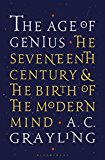
by A.C. Grayling
Published 2017
Out of a 'fractured and fractious time,' the author asserts persuasively, the medieval mind evolved into the modern. Another thought-provoking winner from Grayling." - Kirkus
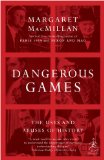
by Margaret MacMillan
Published 2010
Margaret MacMillan, an acclaimed historian and “great storyteller” (The New York Review of Books), explores here the many ways in which history – its values and dangers – affects us all, including how it is used and abused.

by Robert Kagan
Published 2007
From the author of the immensely influential and best-selling Of Paradise and Power—a major reevaluation of America’s place in the world from the colonial era to the turn of the twentieth century.

 (1).gif)
When men are not regretting that life is so short, they are doing something to kill time.
Click Here to find out who said this, as well as discovering other famous literary quotes!

Can you name the title?
Test your book knowledge with our daily trivia challenge!