
-
Your next favorite book
is waiting.
Summary | Excerpt | Reviews | Read-Alikes | Genres & Themes | Author Bio
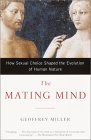
How Sexual Choice Shaped the Evolution of Human Nature
by Geoffrey F. MillerDid the human mind evolve, like the peacock's tail and the elk's antlers, for courtship and mating? Find out in The Mating Mind - A landmark in our understanding of our own species.
Many aspects of how and why the human mind evolved remain mysterious. While Darwinian natural selection has successfully explained the evolution of much of life on earth, it has never seemed fully adequate to explain the aspects of our minds that seem most uniquely and profoundly human--art, morality, consciousness, creativity, and language. Nor has natural selection offered solutions to how the human brain evolved so quickly--in less than 2 million years--and why such a large brain remains unique to our species.
Now, in The Mating Mind, a pioneering work of evolutionary science, these aspects of human nature are at last explored and explained. Until fairly recently most biologists have ignored or rejected Darwin's claims for his other great theory of evolution--sexual selection through mate choice, which favors traits simply because they prove attractive to the opposite sex. But over the last two decades, biologists have taken up Darwin's insights into how the reproduction of the sexiest is as much a focus of evolution as the survival of the fittest.
In this brilliantly ambitious and provocative book, evolutionary psychologist Geoffrey Miller shows the evolutionary power of sexual choice and the reasons why our ancestors became attracted not only to pretty faces and healthy bodies, but to minds that were witty, articulate, generous, and conscious. The richness and subtlety of modern psychology help to reveal how the human mind evolved, like the peacock's tail and the elk's antlers, for courtship and mating.
Drawing on new ideas from evolutionary biology, economics, and psychology, Miller illuminates his arguments with examples ranging from natural history to popular culture, from the art of New Guinea's bowerbirds to the sexual charisma of South Park's school chef. Along the way, he provides fascinating insights into the inarticulacy of teenage boys, the diversity of ancient Greek coins, the reasons why Scrooge was single, the difficulties of engaging with modern art, and the function of sumo wrestling.
Witty, powerfully argued, and continually thought-provoking, Miller's cascade of ideas bears comparison with such pivotal books as Richard Dawkins's The Selfish Gene and Steven Pinker's The Language Instinct. It is a landmark in our understanding of our own species.
Central Park
Central Park divides two of Manhattan's greatest treasure collections. On the West Side stands the American Museum of Natural History, with its dinosaur fossils, stuffed African elephants, dioramas of apes, and displays of ancient human remains. On the East Side stands the Metropolitan Museum of Art, with its Rembrandt self-portraits, peacock-shaped sitar, gold rapiers, Roman temple, Etruscan mirrors, and Jacques Louis David's Death of Socrates.
These works symbolize our unique human capacities for art, music, sports, religion, self-consciousness, and moral virtue, and they have troubled me ever since my student days studying biology at Columbia University. It was easy enough for me to take a taxi along the West Seventy-ninth Street transverse (the natural history museum) to East Eighty-first Street (the Met). It was not so easy for our ancestors to cross over from the pre-human world of natural history to the world of human culture. How did they transform themselves...
 Dr. Nicholas Humphrey, New School for Social Research
A brilliant and seductive book. It will sweep you off your feet. And, when you come to earth again, you'll find yourself seeing the human mind and its most prized creations with new eyes. Helena Cronin
Why does our species tell jokes, build monuments, compose sonatas, give to charity, compete in sports, follow fashion? Our endless inventiveness, our elaborate culture, seem to defy Darwinian explanation. Not so, says Geoffrey Miller. They are our sexual ornaments, our peacocks' tails, displaying our value to potential mates. This elegant, original, and lucid book is beguiling testimony to its own thesis a fitting new feather in our cultural cap. Helena Cronin
Why does our species tell jokes, build monuments, compose sonatas, give to charity, compete in sports, follow fashion? Our endless inventiveness, our elaborate culture, seem to defy Darwinian explanation. Not so, says Geoffrey Miller. They are our sexual ornaments, our peacocks' tails, displaying our value to potential mates. This elegant, original, and lucid book is beguiling testimony to its own thesis a fitting new feather in our cultural cap. Richard Dawkins
Sexual selection, Darwin's 'other' theory, has finally come in from the cold....One of the hottest topics in modern Darwinism. The idea that the human mind evolved as a sort of software peacock's tail has been mooted before, usually to be dismissed in favor of some alternative theory. Geoffrey Miller has really been the one to run with that ball, and he now brings his ideas and evidence together in this thoughtful, witty, and vividly written book. It is a work of advocacy, and Miller is a beguilingly skilled advocate. But there's nothing wrong with advocacy if you are right. And I think he just may be. Richard Dawkins
Sexual selection, Darwin's 'other' theory, has finally come in from the cold....One of the hottest topics in modern Darwinism. The idea that the human mind evolved as a sort of software peacock's tail has been mooted before, usually to be dismissed in favor of some alternative theory. Geoffrey Miller has really been the one to run with that ball, and he now brings his ideas and evidence together in this thoughtful, witty, and vividly written book. It is a work of advocacy, and Miller is a beguilingly skilled advocate. But there's nothing wrong with advocacy if you are right. And I think he just may be.
Dr. Nicholas Humphrey, New School for Social Research
A brilliant and seductive book. It will sweep you off your feet. And, when you come to earth again, you'll find yourself seeing the human mind and its most prized creations with new eyes. Helena Cronin
Why does our species tell jokes, build monuments, compose sonatas, give to charity, compete in sports, follow fashion? Our endless inventiveness, our elaborate culture, seem to defy Darwinian explanation. Not so, says Geoffrey Miller. They are our sexual ornaments, our peacocks' tails, displaying our value to potential mates. This elegant, original, and lucid book is beguiling testimony to its own thesis a fitting new feather in our cultural cap. Helena Cronin
Why does our species tell jokes, build monuments, compose sonatas, give to charity, compete in sports, follow fashion? Our endless inventiveness, our elaborate culture, seem to defy Darwinian explanation. Not so, says Geoffrey Miller. They are our sexual ornaments, our peacocks' tails, displaying our value to potential mates. This elegant, original, and lucid book is beguiling testimony to its own thesis a fitting new feather in our cultural cap. Richard Dawkins
Sexual selection, Darwin's 'other' theory, has finally come in from the cold....One of the hottest topics in modern Darwinism. The idea that the human mind evolved as a sort of software peacock's tail has been mooted before, usually to be dismissed in favor of some alternative theory. Geoffrey Miller has really been the one to run with that ball, and he now brings his ideas and evidence together in this thoughtful, witty, and vividly written book. It is a work of advocacy, and Miller is a beguilingly skilled advocate. But there's nothing wrong with advocacy if you are right. And I think he just may be. Richard Dawkins
Sexual selection, Darwin's 'other' theory, has finally come in from the cold....One of the hottest topics in modern Darwinism. The idea that the human mind evolved as a sort of software peacock's tail has been mooted before, usually to be dismissed in favor of some alternative theory. Geoffrey Miller has really been the one to run with that ball, and he now brings his ideas and evidence together in this thoughtful, witty, and vividly written book. It is a work of advocacy, and Miller is a beguilingly skilled advocate. But there's nothing wrong with advocacy if you are right. And I think he just may be.
If you liked The Mating Mind, try these:

by Iain McCalman
Published 2010
Darwin's Armada tells the stories of Charles Darwin, Thomas Huxley, Joseph Hooker and Alfred Wallace, four young amateur naturalists from Britain who voyaged to the southern hemisphere during the first half of the nineteenth century in search of adventure and scientific fame.

by David Berreby
Published 2008
Berreby shows how our "tribal'' sense is a part of human nature, expressing itself in every aspect of life, effecting our thoughts, our health and our society more than we realize.
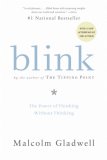
by Malcolm Gladwell
Published 2007
Drawing on cutting-edge neuroscience and psychology and displaying all of the brilliance that made The Tipping Point a classic, Blink changes the way you'll understand every decision you make. Never again will you think about thinking the same way.



 (1).gif)
I am what the librarians have made me with a little assistance from a professor of Greek and a few poets
Click Here to find out who said this, as well as discovering other famous literary quotes!

Can you name the title?
Test your book knowledge with our daily trivia challenge!