
-
Your next favorite book
is waiting.
Summary | Excerpt | Reviews | Beyond the Book | Readalikes | Genres & Themes | Author Bio
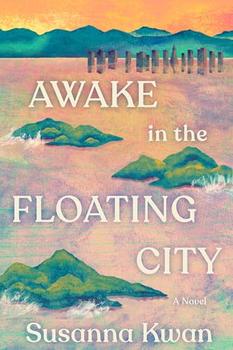
A Novel
by Susanna Kwan Book Reviewed by:
Excerpt
Awake in the Floating City
High up in Unit 7763, each night slid in like an oil spill, filling the hours with sludge and shine until it seeped into another day. Bo was carrying on a long solitude here, stranded in the studio apartment she rented, one island among hundreds in this building, in a city inundated by rain, so saturated it could be called drowned.
The rain had kept on for seven years. It slowed some days but never stopped. Overnight, it seemed, the city had transformed into a rainforest. Vines that ran from roof to ground sucked up the water and sent out shoots and tendrils. The skyline brightened from gunmetal to green, softening the sharp edges. A steward on Tamalpais, she imagined, must have seen the sudden verdant thumb of land to the south, dividing sea and bay. Below, streets transformed into rivers, and the rivers blew out windows, tore doors from their frames, widened into buildings through the new openings. The water took down statues and leveled groves, carried entire families away. People fled or drowned—or moved to higher ground, where they relearned how to live in the city they'd known as home, a place the rain had claimed.
Today the quiet was punctured by ringing. Her cousin, Jenson, had chartered a boat, in part for her overdue evacuation, and it was scheduled to depart in two weeks. He'd been calling at least daily from British Columbia with reminders: the boat would leave at noon sharp; she should bring only the essentials; anything else could be replaced up north. She listened until he was done recording his message.
Everyone she knew had left by now, gone to Greenland or Siberia or Maine—inland, north, overseas, wherever there was an opportunity. In their messages, they asked, with the patronizing concern of the secure, how she was doing, if their family homes were still standing, when she might move or at least try to visit. They sent birth announcements and exhibition announcements, video footage of cities that had risen in just a few short years, the occasional rumor of looming water wars where they lived. Mostly they avoided mention of the refugee camps that now lined the routes of migration that had emerged following mass displacement, the river towns engulfed by monsoons, the unprecedented temperatures that had evaporated reservoirs, fried vegetation, and filled the morgues. Bo was embarrassed not to share their urgency to leave. They implored her to find a better, safer place, and she assured them she was making plans, tried to see what they saw, but couldn't.
An electric hum pitched down, and a moment later the power went out. Silence. With both hands, she lifted her preferred plate from a shelf and set it on the counter noiselessly. The swells of uncertainty paused as she pulled a few dry nubs from the mycelium wall in her kitchen and arranged an ascetic meal on the cobalt-glazed ceramic. The flowers on the trim contrasted with any food: the mushrooms, a potato, a broccoli stalk, or a halved egg, wreathed in blue. She chewed and swallowed. Then, with absolute care, as if handling glass, she washed and dried the dish and returned it to its place. A tarry feeling returned, starting low, in her legs, and as it filled her she felt soothed by its familiarity, like molten night pulling her to the floor.
When the sky began to darken, she forced herself up to the roof. The last two years, her twice-weekly trips to the market had been tiny anchors to the world. Life was going on outside. She'd make herself walk the aisles, trying to appreciate feeling, not just hearing, the rain. And she'd buy food—even without much appetite, she had to eat.
The rooftop economy had emerged in densely populated sectors as the flooding had worsened. Nimble street vendors were the first to move their operations up, followed by small businesses with storefronts. Together they pushed the city to expedite relocation permits and build bridges to replace the wrecked roads.
Excerpted from Awake in the Floating City by Susanna Kwan. Copyright © 2025 by Susanna Kwan. Excerpted by permission of Pantheon Books. All rights reserved. No part of this excerpt may be reproduced or reprinted without permission in writing from the publisher.


 (1).gif)
The whole problem with the world is that fools and fanatics are always so certain of themselves, and wiser people ...
Click Here to find out who said this, as well as discovering other famous literary quotes!

Can you name the title?
Test your book knowledge with our daily trivia challenge!
Your guide toexceptional books
BookBrowse seeks out and recommends the best in contemporary fiction and nonfiction—books that not only engage and entertain but also deepen our understanding of ourselves and the world around us.