-
Your next favorite book
is waiting.
Summary | Excerpt | Reading Guide | Reviews | Beyond the book | Read-Alikes | Genres & Themes | Author Bio

The Great Fight to Win the Vote
by Elaine Weiss Book Reviewed by:
The nail-biting climax of one of the greatest political battles in American history: the ratification of the constitutional amendment that granted women the right to vote.
Nashville, August 1920. Thirty-five states have ratified the Nineteenth Amendment, twelve have rejected or refused to vote, and one last state is needed. It all comes down to Tennessee, the moment of truth for the suffragists, after a seven-decade crusade. The opposing forces include politicians with careers at stake, liquor companies, railroad magnates, and a lot of racists who don't want black women voting. And then there are the "Antis" - women who oppose their own enfranchisement, fearing suffrage will bring about the moral collapse of the nation. They all converge in a boiling hot summer for a vicious face-off replete with dirty tricks, betrayals and bribes, bigotry, Jack Daniel's, and the Bible.
Following a handful of remarkable women who led their respective forces into battle, along with appearances by Woodrow Wilson, Warren Harding, Frederick Douglass, and Eleanor Roosevelt, The Woman's Hour is an inspiring story of activists winning their own freedom in one of the last campaigns forged in the shadow of the Civil War, and the beginning of the great twentieth-century battles for civil rights.
Chapter 1
To Nashville
Carrie Chapman Catt had spent a long night, day, and early evening on trains clattering over a thousand miles of track from New York City to Nashville. In the hours she wasn't reading field reports and legal documents, rimless eyeglasses perched on her nose, she read the newspapers and indulged in the guilty pleasure of a detective novel.
By the time the train pulled into Nashville in the dusky twilight, it was hard to make out the copper-and-bronze statue of the messenger god Mercury perched atop the Union Station tower, greeting travelers to the bustling capital city. Minerva, the warrior goddess, might have been a more fitting figure for the president of the National American Woman Suffrage Association, Susan B. Anthony's anointed heir, the supreme commander of its great suffrage army, the woman they called "the Chief." Carrie Catt had been summoned to lead her troops into the fray one last time. At least she dearly hoped this might be the last time.
She'd ...
Nearly 100 years later, we know that the Nineteenth Amendment did ultimately pass, but Weiss retains an element of suspense in her narrative. She keeps readers on the edge of their seats as she outlines how very close the amendment came to being defeated. I particularly enjoyed the way Weiss placed the culminating vote in historical context, clearly outlining the political and social factors that made the time right to advance the amendment, but also made its passage questionable...continued
Full Review
 (623 words)
(Reviewed by Kim Kovacs).
 Blanche Wiesen Cook, author of the New York Times bestseller Eleanor Roosevelt
Imaginatively conceived and vividly written, The Woman's Hour gives us a stirring history of women's long journey to suffrage and to political influence...an inspiration in the continuing struggles for suffrage, and for race and gender justice, and for democracy. Lynne Cheney, Author of the New York Times bestseller James Madison
Writing with the verve this story deserves, Elaine Weiss brings to life the women who rallied in Nashville to get the nineteenth amendment ratified. From the gracious Carrie Chapman Catt to the radical Sue White, they were fearless in battle and elated in a victory that changed history. Three cheers for Weiss for this spirited and inspiring account. Margot Lee Shetterly, author of the #1 New York Times bestseller Hidden Figures
Anyone interested in the history of our country's ongoing fight to put its founding values into practice - as well as those seeking the roots of current political fault lines - would be well-served by picking up The Woman's Hour.
Blanche Wiesen Cook, author of the New York Times bestseller Eleanor Roosevelt
Imaginatively conceived and vividly written, The Woman's Hour gives us a stirring history of women's long journey to suffrage and to political influence...an inspiration in the continuing struggles for suffrage, and for race and gender justice, and for democracy. Lynne Cheney, Author of the New York Times bestseller James Madison
Writing with the verve this story deserves, Elaine Weiss brings to life the women who rallied in Nashville to get the nineteenth amendment ratified. From the gracious Carrie Chapman Catt to the radical Sue White, they were fearless in battle and elated in a victory that changed history. Three cheers for Weiss for this spirited and inspiring account. Margot Lee Shetterly, author of the #1 New York Times bestseller Hidden Figures
Anyone interested in the history of our country's ongoing fight to put its founding values into practice - as well as those seeking the roots of current political fault lines - would be well-served by picking up The Woman's Hour.Carrie Chapman Catt (1859-1947), the president of the National American Woman Suffrage Association (NAWSA) when Tennessee voted on the ratification of the Nineteenth Amendment, was instrumental in getting the act passed. During the 1920 NAWSA convention, she proposed a national League of Women Voters—six months before the ratification of the Nineteenth Amendment.
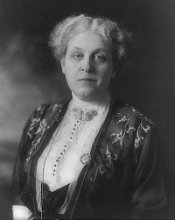 Catt called the League a "mighty political experiment," a way to help the 20 million women she was sure would soon be able to exercise the right to vote. Catt envisioned an organization that would not only educate this new electorate but would encourage them to use their newly granted power to shape public policy. The idea took hold and spread quickly; by 1924, there ...
If you liked The Woman's Hour, try these:

by Amy Sohn
Published 2022
The New York Times–bestselling author Amy Sohn presents a narrative history of Anthony Comstock, anti-vice activist and U.S. Postal Inspector, and the remarkable women who opposed his war on women's rights at the turn of the twentieth century.
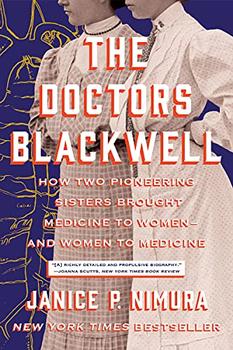
by Janice P. Nimura
Published 2022
Elizabeth Blackwell believed from an early age that she was destined for a mission beyond the scope of "ordinary" womanhood.

by Elizabeth Letts
Published 2019
This richly imagined novel tells the story behind The Wonderful Wizard of Oz, the book that inspired the iconic film, through the eyes of author L. Frank Baum's intrepid wife, Maud.

 (1).gif)
To win without risk is to triumph without glory
Click Here to find out who said this, as well as discovering other famous literary quotes!

Can you name the title?
Test your book knowledge with our daily trivia challenge!