-
Your next favorite book
is waiting.
Summary | Excerpt | Reading Guide | Discuss | Reviews | Beyond the book | Read-Alikes | Genres & Themes | Author Bio
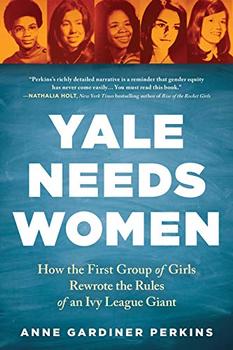
How the First Group of Girls Rewrote the Rules of an Ivy League Giant
by Anne Gardiner Perkins Book Reviewed by:
"If Yale was going to keep its standing as one of the top two or three colleges in the nation, the availability of women was an amenity it could no longer do without."
In the summer of 1969, from big cities to small towns, young women across the country sent in applications to Yale University for the first time. The Ivy League institution dedicated to graduating "one thousand male leaders" each year had finally decided to open its doors to the nation's top female students. The landmark decision was a huge step forward for women's equality in education.
Or was it?
The experience the first undergraduate women found when they stepped onto Yale's imposing campus was not the same one their male peers enjoyed. Isolated from one another, singled out as oddities and sexual objects, and barred from many of the privileges an elite education was supposed to offer, many of the first girls found themselves immersed in an overwhelmingly male culture they were unprepared to face. Yale Needs Women is the story of how these young women fought against the backward-leaning traditions of a centuries-old institution and created the opportunities that would carry them into the future. Anne Gardiner Perkins's unflinching account of a group of young women striving for change is an inspiring story of strength, resilience, and courage that continues to resonate today.
PROLOGUE
When I was fifty-two years old, I decided that the time had come to get my PhD. Better late than never. The idea was not entirely new. My best friend, Hazel, and I had met in our twenties, when we were both history graduate students, and I had considered getting a doctorate then. But while Hazel went on to get her PhD, I had felt pulled to different work, and after getting my master's, I'd gotten a job teaching in an urban high school. Thirty years later, I was still in education, now working on policies and programs for Massachusetts's public colleges and universities. I wanted to strengthen my thinking about the issues I worked on, and I knew that UMass Boston had a well-regarded higher education program. Once again, the doctorate beckoned.
So I began. Monday through Thursday, I worked at my job on Beacon Hill. Fridays, I went to class at UMass Boston. Weekends, I studied. My husband, Rick, did all the cooking and—let's be ...
Good nonfiction books for book clubs?
...Keith O'Brien Code Girls by Liza Mundy Radium Girls by Kate Moore (irritating how they all use "girls" in the title) Valiant Women by Lena S. Andrews Yale Needs Women by Anne Gardiner Perkins Brave the River by Melissa Sevigny … and I could go on. If you're interested in checking out some woman-centric nonfiction, I'd suggest logging in to...
-kim.kovacs
Here are some of the comments posted about Yale Needs Women in our legacy forum.
You can see the full discussion here.
“The women who go first and speak out help shape a better world for all of us.” Which women in history do you think fit this description? Which do you personally admire? Who are your female heroes or mentors?
kimk stole my thunder. Michelle Obama was the first name that popped into my head as well. Her class, poise, and ability to never take the bait and "go low" in the face of such hostility was and is simply amazing. Still, I definitely like ... - marks
"Changes in social structures require a social movement." Do you agree? What examples of social movements do you see today? Do you consider yourself part of any of them?
I do agree with that statement if you expect change in your generation. Otherwise it happens so incrementally you miss it. So many social movements today, Black Lives Matter, Me Too, LBGTQ. Change happening so fast now that it's scaring the ... - smallino
Are there organizations you know of that still need a lot of work to achieve gender or racial equality?
Structural gender inequality and racial inequity in the U.S. are still prevalent in almost everywhere, with often horrific results (e.g., cases of policy brutality against BIPOC). I didn’t realize until I read The New Jim Crow how ... - marianned
Brewster Kingman was the biggest obstacle to gender equity at Yale. What was your opinion of his intransigence on this issue? Are obstacles like Kingman still an issue in academia? Perhaps in certain disciplines?
Are there still Kingman Brewsters in the academic world? Probably, but I suspect theirs actions are more subtle. Brewster’s background as part of an elite Old Boys network made it hard for him to see the need for change. Furthermore, he ... - marianned
Do you believe male-female ratio was the root of the female students’ discontent? Why or why not? What other factors do you feel played into the women’s unhappiness with the status quo?
I don't think the ratio of men vs women was the issue. When I went to college in 1968, I attended a large public college. I thought I'd like the ratio, which at the time had 10 men to every women. It was fun. Always something to do, had... - smallino
The rich stories of the women are wound nicely together around the events that were happening at the time, including the Black Panther trial and Vietnam War protests (Kara M). I think this book is a must-read for those interested in the evolution of university coeducation, as well as women's rights. We must study history, not ignore or destroy it, in order to learn how to better ourselves for the future (Liz B)...continued
Full Review
 (720 words)
(Reviewed by First Impressions Reviewers).
 Edward B. Fiske, bestselling author of Fiske Guide to Colleges
Anne Gardiner Perkins weaves a tale of courage in the face of arrogance, frustration giving way to hard-won triumphs, and the redeeming power of shared visions and friendships. Perkins makes the story of these early and unwitting feminist pioneers come alive against the backdrop of the contemporaneous civil rights and anti-war movements of the 1970s, and offers observations that remain eerily relevant on U.S. campuses today. Henry Louis Gates, Jr., Alphonse Fletcher University Professor, Harvard University
Anne Gardiner Perkins has written an enjoyable and lively history...a comprehensive view of the many social and political changes that faced the young college women of this era...Yale Needs Women is an important addition to feminist history. Janet L. Yellen, Distinguished Fellow, Brookings Institution
Yale Needs Women is a riveting and uplifting account of the experiences of Yale's early women coeds-first admitted in 1969. It reveals the multiple barriers faced by these pioneers, as it chronicles their brave efforts to overcome them. Thanks to these champions of women's rights, with similar efforts across the country, opportunities for women have improved. The fight is not over. This inspiring book is a 'must read' for everyone. Lynn Povich, author of The Good Girls Revolt
In her compelling account of the tumultuous early years, Anne Gardiner Perkins tells how these young women met the challenge with courage and tenacity and forever changed Yale and its chauvinistic motto of graduating 1,000 male leaders every year. Nathalia Holt, #1 New York Times bestselling author of Rise of the Rocket Girls
Yale Needs Women breaks through the male stronghold that once defined the Ivy League and delivers the powerful history of a group of young women bold enough to reshape undergraduate education. Perkins’ richly detailed narrative is a reminder that gender equity has never come easily, but instead is borne from the exertions of those who precede us. You must read this book: not only to understand our past but to glean critical insight into the future of our academic institutions.
Edward B. Fiske, bestselling author of Fiske Guide to Colleges
Anne Gardiner Perkins weaves a tale of courage in the face of arrogance, frustration giving way to hard-won triumphs, and the redeeming power of shared visions and friendships. Perkins makes the story of these early and unwitting feminist pioneers come alive against the backdrop of the contemporaneous civil rights and anti-war movements of the 1970s, and offers observations that remain eerily relevant on U.S. campuses today. Henry Louis Gates, Jr., Alphonse Fletcher University Professor, Harvard University
Anne Gardiner Perkins has written an enjoyable and lively history...a comprehensive view of the many social and political changes that faced the young college women of this era...Yale Needs Women is an important addition to feminist history. Janet L. Yellen, Distinguished Fellow, Brookings Institution
Yale Needs Women is a riveting and uplifting account of the experiences of Yale's early women coeds-first admitted in 1969. It reveals the multiple barriers faced by these pioneers, as it chronicles their brave efforts to overcome them. Thanks to these champions of women's rights, with similar efforts across the country, opportunities for women have improved. The fight is not over. This inspiring book is a 'must read' for everyone. Lynn Povich, author of The Good Girls Revolt
In her compelling account of the tumultuous early years, Anne Gardiner Perkins tells how these young women met the challenge with courage and tenacity and forever changed Yale and its chauvinistic motto of graduating 1,000 male leaders every year. Nathalia Holt, #1 New York Times bestselling author of Rise of the Rocket Girls
Yale Needs Women breaks through the male stronghold that once defined the Ivy League and delivers the powerful history of a group of young women bold enough to reshape undergraduate education. Perkins’ richly detailed narrative is a reminder that gender equity has never come easily, but instead is borne from the exertions of those who precede us. You must read this book: not only to understand our past but to glean critical insight into the future of our academic institutions.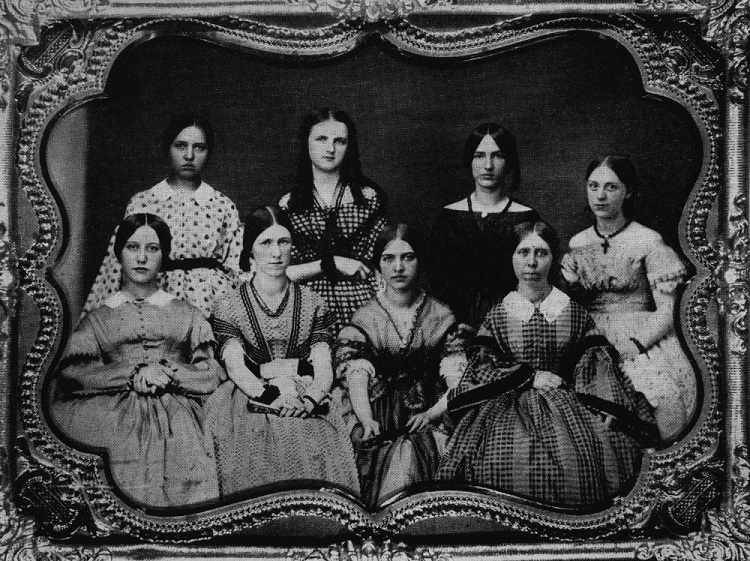 In Yale Needs Women, author Anne Gardiner Perkins explores the circumstances surrounding Yale University's decision to go coed in 1969, and the experiences of its first female students. Yale's change in policy was hardly revolutionary, as some colleges and universities in the U.S. had been coed since the 19th century.
Oberlin College in Ohio was the first higher learning institution to admit women in the United States. The college opened in 1833, permitted Blacks to apply in 1835, and became coed in 1837 with the admission of four female students. Three of the four graduated with a Bachelor of Arts in 1841. The fourth, Mary Kellogg, had to drop out because she could no longer afford the tuition, but later returned to finish after she was...
If you liked Yale Needs Women, try these:
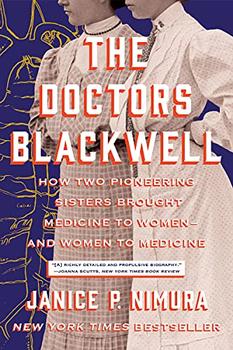
by Janice P. Nimura
Published 2022
Elizabeth Blackwell believed from an early age that she was destined for a mission beyond the scope of "ordinary" womanhood.

by Keith O'Brien
Published 2019
The untold story of five women who fought to compete against men in the high-stakes national air races of the 1920s and 1930s — and won.

by Liza Mundy
Published 2018
"Code Girls reveals a hidden army of female cryptographers, whose work played a crucial role in ending World War II.... Mundy has rescued a piece of forgotten history, and given these American heroes the recognition they deserve." - Nathalia Holt, bestselling author of Rise of the Rocket Girls

 (1).gif)
Give me the luxuries of life and I will willingly do without the necessities.
Click Here to find out who said this, as well as discovering other famous literary quotes!

Can you name the title?
Test your book knowledge with our daily trivia challenge!